The rain came down in silver sheets that Thursday night, the kind that turned suburban streets into black mirrors and made every porch light bleed. Adrien pulled up to the curb of the house he’d never quite called home, the wipers slicing across his windshield like a heartbeat he couldn’t slow. Thirty-two years old, and the weight in his chest felt heavier than the engine humming beneath him.
He killed the lights. For a moment he just sat there, watching the silhouettes move behind the dining-room curtains—his father pacing, his mother’s arms folded like battle flags, Lily lounging on the couch with that half-smile she wore when she knew blood was about to spill.
He already knew what they were going to say. He’d heard every variation for fourteen years.
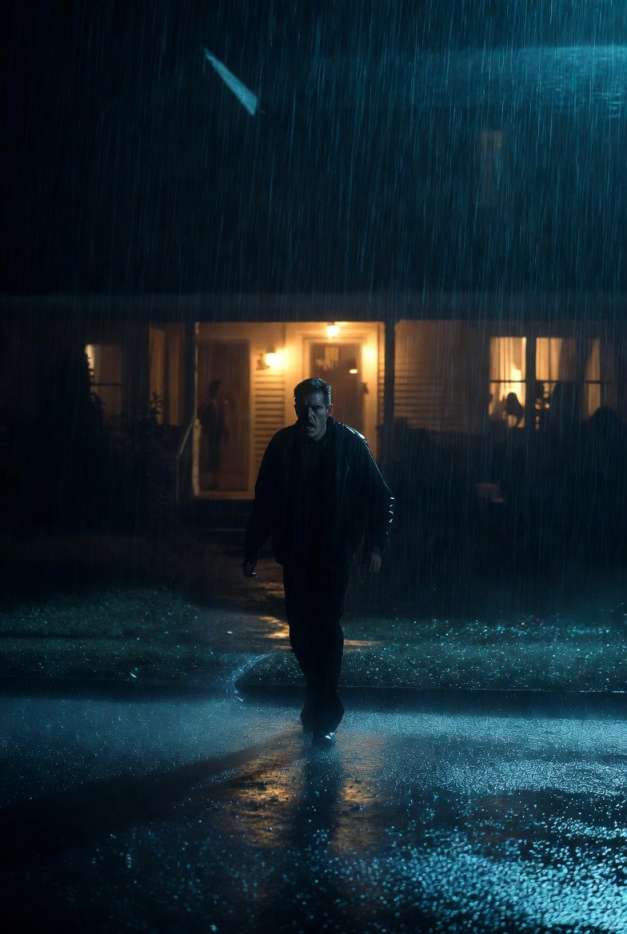
The front door opened before he could knock. His mother’s voice cut through the downpour.
“Adrien. Inside. Now.”
No hello. No how are you. Just the summons.
He stepped into the familiar smell of lemon polish and simmering resentment. The living room felt smaller than he remembered, the furniture arranged like a stage set for judgment. His father stopped pacing long enough to point at the worn armchair as if it were the defendant’s seat.
“You’re thirty-two,” Dad started, voice gravelly with practiced disappointment. “This… internet thing. It’s gone on long enough.”
Adrien felt his jaw tighten, but he kept his face still. The rain hammered the windows like impatient fingers. Lily sipped her wine—Chardonnay, always Chardonnay—and watched him the way a cat watches a bird with a broken wing.
His mother stepped closer, perfume sharp as accusation. “We can’t keep enabling this fantasy. You show up here needing help with every little thing—”
“I came because you texted me,” he said quietly.
Lily’s laugh was soft, musical, lethal. “Oh, Adrien. You’ve been coasting for years. It’s sad, honestly.”
The words landed exactly where they were meant to. Not because they were true—God, not because they were true—but because they revealed everything they believed about him. The kid who dropped out. The disappointment. The cautionary tale they told at dinner parties to make their own lives shine brighter.
He looked at each of them in turn: the father who measured love in degrees earned, the mother who stirred bitterness into every cup of coffee, the sister whose success had always required his failure as its shadow.
Something inside him clicked into place. Not rage. Not even pain anymore. Just the clean, cold certainty of a door finally closing.
“All right,” he said, voice almost gentle. He picked up his jacket. “If that’s what you want.”
His mother opened her mouth—another line already loaded—but he was already walking. The door shut behind him with a soft finality that felt louder than any slam.
In the car, rain streaking the glass, he caught his own eyes in the rearview. They weren’t the eyes of a broken man. They were the eyes of someone who had just been handed the match.
Three weeks. That’s how long he would let them believe they had won.
The penthouse was quiet except for the low hum of the city far below. Floor-to-ceiling windows framed a kingdom of lights that his family would never see from their carefully maintained cul-de-sac. Adrien stood at the glass with a glass of whiskey, watching rain trace paths down the pane like tears he refused to shed.
He hadn’t told them about the companies. The eight-figure exits. The private jet he kept in a hangar two states away. The house in cash at twenty-seven. None of it.
Why would he? They had already written the ending.
His phone buzzed. Cousin Jacob.
Heard Mom telling the church ladies you’re living out of your car. You good, man?
Adrien smiled in the dark. Not angry. Amused, almost. The kind of amusement that sharpens into something surgical.
He typed back: Define good.
The replies came in waves after that. Lily joking about him fetching coffee at her firm. His mother sighing to neighbors about “poor Adrien, still finding himself.”
He let it all settle. Let them stack the bricks of their own humiliation.
Then the email from the bank arrived.
Two withdrawals. Over fourteen thousand dollars. From the old joint account he’d forgotten to close. In-person. Two blocks from his parents’ house. Authorized, his mother had told the teller, family emergency.
He sat very still at his desk, the skyline glittering behind him like an indifferent audience. On the monitor, security footage the branch manager had reluctantly shared showed his mother smiling, signing forms, walking out with cashier’s checks.
That same week, Lily posted photos of her gleaming new luxury SUV on social media. Family blessing, the caption read. So grateful.
Adrien stared at the post until the screen went dark.
The last thread of loyalty snapped.
He didn’t confront them. Not yet.
Instead, he moved like a man building a cathedral no one else could see. Lawyers sealed every account. A discreet investigator delivered thick folders on family finances—thin retirement, maxed cards, second mortgages, Lily’s quiet desperation wearing designer heels.
His father’s property development company teetered on the edge of collapse. A personal guarantee on a loan that would drown him when it failed.
Adrien read the reports the way a conductor studies sheet music.
He bought the distressed assets portfolio through a trusted firm. The townhome project—his father’s pride—appeared in red ink. High risk. Fire sale coming.
He wired the capital without hesitation.
Quietly, he green-lit expansions in Europe and Southeast Asia. Shook hands in rooms that smelled of aged whiskey and real power. Sat for a magazine feature he conditioned on perfect timing.
From doubt to dominance.
His face on the cover. The story of the kid everyone—everyone—had written off.
He waited.
The restaurant was all warm oak and crystal chandeliers, the kind of place his family only visited on special occasions they couldn’t really afford. They arrived smiling, arms open, voices honeyed with sudden pride.
“Adrien, we saw the magazine,” his mother said, hugging him too tightly. “We had no idea…”
Of course they didn’t.
They ordered. Small talk flowed like cheap wine. Lily complimented his watch. His father clapped him on the shoulder like they were old war buddies.
Halfway through the main course, Adrien slid the folder across the linen.
His father opened it. The color drained from his face.
“This… this is our property.”
“Was,” Adrien corrected softly. “It’s mine now.”
Silence crashed over the table.
He didn’t raise his voice. He didn’t need to. Every word landed like a scalpel.
“I didn’t have to lie. I didn’t have to steal. I just waited. And while you were celebrating my supposed homelessness with money you took from my account, I was buying the block you’re standing on.”
Lily’s perfectly manicured nails dug into the tablecloth. His mother’s cheeks burned crimson. His father looked suddenly, painfully old.
Adrien stood, dropped a black credit card on the bill, and buttoned his jacket.
“Enjoy your evening,” he said. “The staff at the development site already know the new owner. Their jobs are safe. Yours… weren’t part of the deal.”
He walked out into the night air. Behind him, through the glass, three people sat frozen in the golden light, the ruins of their narrative finally visible to them.
Months later, the townhomes sold out faster than projected. Families moved in. Kids laughed on freshly paved sidewalks. Adrien sometimes drove past in the silver coupe they had never seen, windows down, city wind in his hair.
He never went back to Sunday dinner.
Jacob still texted occasionally—updates on the quiet unraveling: the sold vacation property, Lily’s downgraded car, the careful avoidance of certain social circles.
His mother’s last email was short: You’ve changed.
Adrien read it once, closed the laptop, and stepped onto the penthouse balcony. The city stretched out beneath him, endless and alive.
He hadn’t changed.
He had simply stopped auditioning for a role they wrote for him in a story that was never his.
And as the lights of the block he now owned glittered in the distance, he allowed himself one small, private smile.
Just once, for my own satisfaction… I didn’t just live in the streets.
I bought the whole damn block.
Chapter 2: Echoes in the Hollow
The city never slept, but some nights it whispered.
Adrien stood on the penthouse balcony, the cool night air carrying the faint scent of rain-soaked concrete and distant exhaust. Below, the streets pulsed with yellow cabs and late stragglers, their headlights cutting streaks across wet pavement like accusations he could finally ignore. His phone lay dark on the marble island inside—silent for the first time in weeks. No more texts from Jacob with careful updates. No more brittle voicemails. Just the low hum of the refrigerator and the distant wail of a siren that sounded almost like regret.
He should have felt victorious. The development project was turning profit faster than the projections, each sold townhome a quiet brick in the wall he’d built between himself and the past. Yet as he gripped the railing, knuckles pale against the steel, the victory tasted like ash. Not because he missed them. God, no. Because the hollow space they left behind was larger than he’d expected.
Three weeks after the restaurant, the first crack appeared in the silence.
Jacob called at 2:17 a.m., voice thick with exhaustion and something sharper. “They’re spiraling, man. Your dad won’t leave the den. Sits there staring at the old blueprints like they’re gonna rewrite themselves. Mom’s been… praying. Loudly. At the church group. About prodigal sons and forgiveness.”
Adrien leaned against the kitchen counter, the city lights painting his face in cold blues. He pictured it: his mother in her Sunday pearls, hands clasped, painting him as the wayward child who needed their redemption arc. The image should have amused him. Instead, it landed like a stone in still water, sending ripples through memories he’d tried to bury.
“Tell them I’m not coming back,” he said. His voice was steady, but his free hand tightened around a glass until the crystal bit into his palm.
Jacob hesitated. “Lily’s asking around. Quietly. About you. Real questions this time. Not the mocking ones.”
Adrien ended the call without answering. He poured the whiskey down the sink, watching it swirl away like old blood. Sleep didn’t come that night. Instead, he sat at his desk until dawn, reviewing contracts, green-lighting another acquisition. Work had always been the anchor. Now it felt like armor.
The invitation arrived by courier the following Monday—thick cream paper, embossed lettering. A charity gala. His mother’s name on the host committee. Family Unity Fund, it read. The irony was almost poetic.
He almost tossed it. Almost.
But something—call it curiosity, or the ghost of that snapped thread—made him dress in the tailored black suit that cost more than his father’s annual retirement draw. He arrived late, the ballroom already glittering with crystal chandeliers and forced laughter. The air smelled of expensive perfume, aged scotch, and desperation.
He spotted them immediately.
His mother in navy silk, the same dress she’d worn to Lily’s law school graduation, now hanging a little looser. His father, shoulders hunched, trying to look commanding near the bar. Lily held court near the silent auction table, her new modest sedan keys probably burning a hole in her clutch.
Their eyes found him across the room like magnets.
For a second, the crowd seemed to part. His mother’s face lit with that practiced maternal glow—the one she turned on for church cameras. She started toward him, arms opening.
“Adrien, darling—”
He didn’t move. Didn’t smile. Just watched as the realization hit her: this wasn’t a reunion. This was an audience.
“You came,” she breathed when she reached him, voice pitched low for the surrounding ears. “We knew you would. Family heals, sweetheart. God provides.”
Behind her, his father approached slower, eyes darting to the donors nearby. Measuring. Always measuring.
Lily stayed back, wine glass in hand, but her gaze was sharp, calculating. The golden child who suddenly looked tarnished.
Adrien let the silence stretch just long enough for discomfort to bloom. Then he spoke, voice low, cinematic in its restraint.
“I came to make a donation.” He nodded toward the auction table. “Ten thousand. To the fund. Consider it repayment for the fourteen you took. With interest.”
His mother’s smile froze. The color drained from her cheeks in real time—slow, like paint bleeding on wet canvas. His father’s hand twitched around his drink, the ice clinking like breaking glass.
“Adrien,” his dad started, voice gravelly, “this isn’t the place—”
“No,” Adrien cut in, stepping closer so only they could hear. “This is exactly the place. Where you parade your perfect daughter and your cautionary son. Where you rewrite history with every handshake.”
A server passed with champagne. Adrien took two flutes, handed one to his mother. His fingers brushed hers—cold.
“Drink,” he said softly. “Smile for the cameras. Tell them how proud you are. How the prodigal built something after all.”
Lily finally approached, heels clicking like warning shots. Up close, the cracks showed: new lines at the corners of her eyes, the faint tremor in her hand as she set her glass down.
“You think this makes you better?” she hissed, voice barely above the string quartet. “Buying up Dad’s failure? Parading it like some trophy?”
Adrien met her gaze. For the first time, he saw it—not the polished lawyer, but the scared woman who had needed him small so she could stay large.
“I don’t think it makes me better,” he said. “It just makes me free.”
His father’s shoulders sagged. The man who once grunted dismissals now looked like he was searching for words that had abandoned him years ago. “We were… worried. That’s all. Parents worry.”
“Worried?” Adrien’s laugh was quiet, bitter. “You emptied my account while telling everyone I was homeless. You celebrated with my money. That wasn’t worry. That was contempt.”
The quartet swelled. Around them, donors laughed, oblivious. But in their small circle, the air thickened, heavy with unsaid truths and the scent of expensive regret.
His mother reached for his arm. He stepped back.
“Don’t,” he warned. “Not here. Not ever.”
He turned to leave, the donation already wired, his name prominent on the board. As he crossed the marble floor, he felt their eyes on his back—burning, questioning, breaking.
Outside, the night air hit him like freedom. But as he slid into the silver coupe, his phone lit up. Unknown number.
He answered.
A woman’s voice, professional, edged with urgency. “Mr. Adrien? This is Elena from the development site. There’s been… an incident. Your father showed up. He’s demanding access. Saying it’s still his. Security’s holding him, but he’s not leaving. And he mentioned your sister. Something about fixing this together.”
Adrien stared at the dashboard lights, the engine purring beneath him.
The storm wasn’t over.
It was just learning how to hit back.
The development site glowed under harsh security floods, half-built townhomes rising like skeletal promises against the night sky. Mud clung to Adrien’s polished shoes as he stepped out of the coupe, the silver paint catching the lights like a blade. The air smelled of fresh concrete, damp earth, and the faint metallic tang of impending rain. Somewhere in the distance, a generator hummed like a restless heartbeat.
Elena waited near the temporary office trailer, arms crossed, her hard hat tucked under one arm. “He’s over by Phase Two. Won’t leave. Kept saying blood is thicker than contracts.”
Adrien nodded once, jaw set. He crossed the site alone, footsteps deliberate on the gravel paths he now owned. His father stood under a half-framed roof, hands on a support beam as if it could still anchor him. The man looked smaller out here—windbreaker zipped against the chill, shoulders curved inward. Not the pacing authority from the living room. Just a father who had bet everything on a version of reality that no longer existed.
“Dad.”
The word felt foreign on his tongue after so long.
His father turned slowly. Eyes red-rimmed, not from tears but from the kind of exhaustion that came from watching your life’s narrative unravel in public. “This was supposed to be our legacy. Mine and yours, before you… before everything.”
Adrien stopped a few feet away. No embrace. No softening. The floodlights cast long shadows across the exposed beams, turning the space into a stage stripped of its illusions.
“You guaranteed a loan you couldn’t cover,” Adrien said, voice even. “The company defaulted. I bought it legally. End of story.”
“Not for me.” His father’s hand tightened on the beam until the wood creaked. “Your mother’s barely sleeping. Lily’s talking about bankruptcy if this spreads further. We’re family, Adrien. You don’t burn the bridge and then charge tolls on the ashes.”
The words hung there, heavy with the old script: Sacrifice for us. Compromise. Come back smaller so we can feel bigger.
Adrien’s chest tightened—not with the old hurt, but with the raw recognition of how long he had played along. He thought of the teenage account, the forgotten joint signature, his mother’s casual forgery at the teller window. The photos of Lily’s SUV, keys dangling like a trophy made from his silence.
“You burned it,” he replied, stepping closer. The scent of sawdust and failure filled the air. “The night you kicked me out in the rain. The day you took what wasn’t yours. I just made sure the fire couldn’t spread back to me.”
His father’s face crumpled for a split second—the briefest fracture—before the pride slammed back into place. “We gave you everything. A roof. Food. Opportunities—”
“Opportunities to fail quietly,” Adrien cut in. His voice didn’t rise, but it carried across the empty frames like a director’s command. “While Lily got the spotlight. While you measured my worth by how well I made you look. I built this.” He gestured to the skeletal homes stretching into the dark. “Not because I needed your approval. Because I finally stopped waiting for it.”
A gust of wind rattled the tarps. Rain began to spit from the sky, cold needles against their skin.
From the shadows near the trailer, movement. Lily stepped into the light, heels sinking into the mud, coat clutched tight. She must have followed. Or been called. Her makeup was perfect, but her eyes were wild with the kind of fear that came from watching your carefully curated life tilt off its axis.
“Always the victim,” she said, voice sharp enough to cut rebar. “Poor Adrien, misunderstood genius. You think buying Dad’s mistakes makes you noble? It makes you petty.”
Adrien turned to her. In the floodlights, she looked every bit the corporate warrior—yet the mud on her designer shoes told a different story. The golden child, now standing in the ruins of the pedestal they had all built together.
“Petty?” He let the word linger, tasting it. “I left you the narrative for months. Let you spin your stories at dinners, at church, at your firm. I could have ended this the day you drove off in that SUV. Instead, I let you keep digging.”
His mother appeared then, emerging from a waiting car at the site entrance, hair frizzing in the rain. She hurried over, heels slipping, arms reaching as if she could still pull him back into the family portrait.
“Enough,” she pleaded, voice cracking for the first time in years. Not the sharp director from the living room. A mother watching her constructed world dissolve. “We were wrong. Okay? We didn’t know how well you were doing. If we had—”
“If you had, you would have asked for more,” Adrien finished. The rain fell harder now, soaking his suit, plastering his hair to his forehead. He felt exposed, but not vulnerable. Alive. “That’s the part you still don’t see. It was never about me succeeding. It was about me staying in my place. Below you.”
His father stepped forward, hand outstretched—not in anger, but in a desperate grasp at the old hierarchy. “We can fix this. Bring the property back under the family name. We’ll make it right. Joint venture. Your expertise, our… history.”
The offer hung there, pathetic and transparent. A lifeline thrown from a sinking ship.
Adrien looked at each of them—the father who had grunted away his dreams, the mother who had stolen to preserve the illusion, the sister who had sharpened her success on his supposed failure. Rain streamed down their faces like the tears they refused to shed.
For a moment, the old loyalty flickered. A boy who once just wanted them to see him. But that boy had died the night they closed the door in the rain.
“No,” he said simply.
Lily’s face twisted. “You’ll regret this. When your empire cracks—and it will, because no one succeeds alone—you’ll have no one.”
The words struck deeper than he expected. Not because they were true, but because in the hollow hours of the penthouse, he had wondered the same. The circle had grown small. Too small.
His mother reached for him again. This time he didn’t step back fast enough. Her fingers brushed his sleeve, cold and trembling.
“Adrien… please. We’re still your blood.”
He gently removed her hand. The gesture was kind. Final.
“Blood doesn’t give you permission to bleed me dry.”
He turned toward the trailer, Elena waiting with the security logs. Behind him, their voices rose—pleading, accusing, fracturing—but the rain swallowed most of it. The site was his now. The future was his.
Yet as he reviewed the overnight reports inside the trailer, his phone buzzed on the makeshift desk. A text from an unknown number.
We know what you did to acquire the project. Not everything was legal. Meet us tomorrow or the magazine story becomes the least of your worries. Family protects its own… or destroys it.
Adrien stared at the screen, the rain hammering the metal roof like applause for a tragedy still unfolding.
Outside, car doors slammed. His family retreating into the night.
But the real storm had just learned his name.
Chapter 4: Shadows in the Blueprint
Dawn bled across the development site like a fresh wound, painting the half-finished townhomes in bruised oranges and grays. Adrien hadn’t slept. The anonymous text burned behind his eyes as he stood at the edge of Phase Two, coffee gone cold in his hand. The air carried the sharp bite of wet pine from the distant tree line and the low rumble of construction crews arriving for the day shift. Hard hats and steel-toed boots—his people now. Not his father’s ghosts.
Elena approached with a tablet, her face etched with the kind of professional concern that didn’t quite hide worry. “Security logs show a car circling the perimeter twice last night after your family left. No plates caught clearly. You want me to pull the external cameras?”
He nodded, jaw tight. The threat wasn’t idle. It carried the precise sting of someone who knew exactly where to press—his carefully laundered acquisition path, the offshore entities, the quiet favors exchanged in boardrooms where handshakes replaced paper trails. Someone inside the circle had talked.
Or someone had been watching longer than he realized.
By mid-morning, he was back in the city, the penthouse feeling less like a sanctuary and more like a glass cage overlooking a jungle he no longer fully controlled. He paced the leather-bound study, floor-to-ceiling windows framing the skyline that once felt like victory. Today it felt like exposure.
The meeting was set for neutral ground—a quiet café tucked in a side street downtown, the kind with worn wooden tables and the rich aroma of dark roast that masked heavier conversations. He arrived early, choosing the corner booth with his back to the wall. The threatener had specified “family business.” He came alone.
The woman who slid into the seat across from him was not who he expected.
Mid-forties, sharp cheekbones, eyes the color of storm clouds. She wore a simple gray blazer, but the watch on her wrist cost more than most people’s cars. No introduction. Just a manila folder slid across the scarred oak.
“Call me Claire,” she said, voice low and clipped, like a prosecutor who already had the verdict. “And before you deny anything, know that I have copies of the wire transfers, the shell company filings, and the conversation your father had with the original lender three months before default. Enough to make your magazine feature look like a fairy tale.”
Adrien didn’t touch the folder. He studied her instead—the faint scar above her left eyebrow, the way her fingers drummed once before stilling. Controlled. But not calm.
“Who are you working for?” he asked. The café’s espresso machine hissed in the background, steam rising like unspoken accusations.
Claire leaned in, the scent of her perfume—something expensive and sharp—cutting through the coffee. “Your sister reached out. Quietly. She’s scared, Adrien. Not for herself. For the family name. Your father’s guarantee is still a legal landmine. One push, and it buries everyone.”
Lily. Of course. The golden child, now playing fixer with knives behind her back.
He allowed a small smile, the kind that didn’t reach his eyes. “So she sends a messenger instead of facing me. Typical.”
Claire’s expression didn’t change. “She’s not the only one who stands to lose. Your mother’s church donors are asking questions. Your father’s health—let’s just say the stress is manifesting in ways doctors don’t like. And you…” She tapped the folder. “You crossed lines to get here. Smart lines. But lines.”
The words landed like rain on the site the night before—cold, relentless. Adrien felt the old hollow expand, not with doubt, but with the exhausting weight of it all. He had built empires on precision. Now the past was demanding interest on a debt he thought paid in full.
“What do you want?” he asked, voice steady but the grip on his untouched mug white-knuckled.
“Reinstate the family stake. Ten percent. Silent. Enough for them to save face, cover the debts, and walk away without ruin. In return, the files disappear. Your story stays clean. Everyone wins.”
Adrien laughed once, low and humorless. The sound drew a glance from the barista. “Wins. That’s rich. They stole from me. Lied about me. Kicked me into the rain like yesterday’s trash. And now they want a seat at my table?”
Claire’s eyes softened—just a fraction. Enough to reveal she wasn’t just a hired gun. “They’re desperate. Your mother cried on the phone last night. Real tears. Lily… she admitted the SUV was the final straw. They saw the magazine and realized how small they’d kept you. How small they’d made themselves by doing it.”
For a heartbeat, the café noise faded. Adrien saw flashes: his mother stirring coffee with shaking hands, his father staring at blueprints that no longer belonged to him, Lily’s perfect facade cracking under mounting bills. The boy who once craved their pride stirred somewhere deep. But the man who had bought the block stared back, unyielding.
“Tell them no,” he said, pushing the folder back untouched. “And tell Lily if she wants war, she picked the wrong battlefield.”
Claire stood slowly, smoothing her blazer. “You’re making a mistake. Blood doesn’t wash off easily when it’s your own.”
She left the folder. Adrien sat there long after her coffee grew cold, the weight of it pressing against his chest like an unanswered question.
That evening, the penthouse lights stayed low. He poured a single measure of whiskey but didn’t drink it. Instead, he opened the folder.
Inside: copies of everything. His quiet maneuvers. But also something else—bank records showing his mother’s withdrawals weren’t the first time. Smaller amounts over years. “Emergency funds,” the notes read in her handwriting. For Lily’s tuition. For Dad’s bad bets. For the family that had quietly drained him while pretending he had nothing to give.
The final page was a handwritten note from Lily, scanned and attached.
He was always going to leave us behind. We just made sure we took what we needed first. Fix this, Claire. Or I will.
Adrien’s hand trembled—not with rage, but with the raw, slicing grief of a door that had never truly been open. He stood, walked to the windows, and pressed his forehead to the cool glass. The city sprawled below, indifferent and bright.
His phone rang. Jacob.
“Adrien… your dad collapsed this afternoon. Hospital. They’re saying stress-related. Mom’s asking for you. Lily’s already there.”
The hollow roared.
He grabbed his keys, the silver coupe waiting like a silent promise. As he drove through the glittering streets toward the hospital, one thought cut through the noise:
Was this the trap closing? Or the last chance to decide what kind of man he truly was?
Rain began to fall again, harder this time, blurring the road ahead.
The foundations he had claimed were shifting beneath his feet—and this time, the cracks ran straight through blood.
Chapter 5: Monitors and Mirrors
The hospital corridor smelled of antiseptic and quiet desperation—bleach over fear, cheap coffee, and the faint metallic undertone of illness. Fluorescent lights buzzed overhead like judgmental whispers as Adrien strode through the automatic doors, rain still dripping from his coat onto the linoleum. His shoes left faint wet prints, a trail he couldn’t erase.
Room 417. The nurse at the station had given him a sympathetic nod, mistaking him for the devoted son. If only she knew.
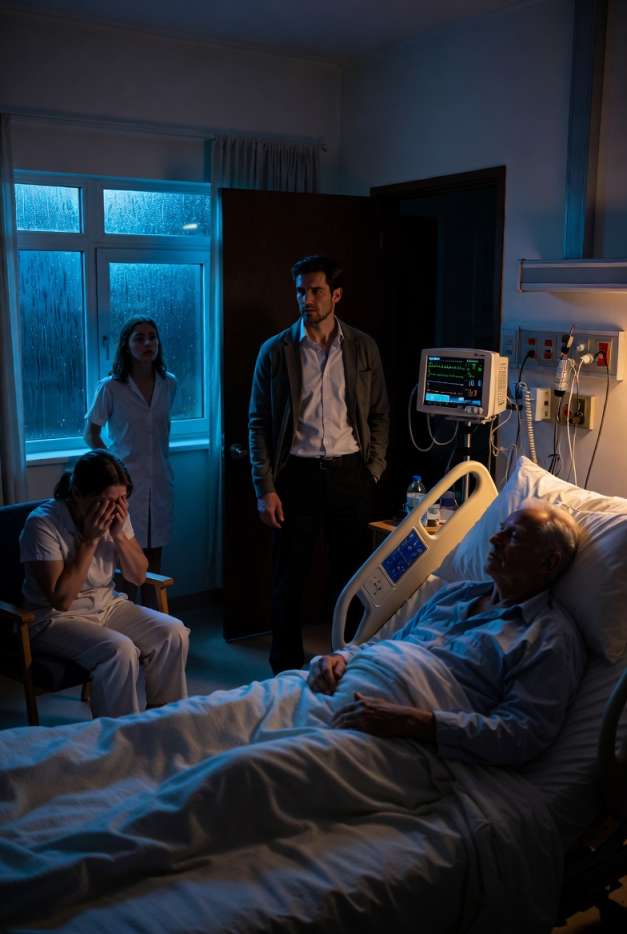
He paused outside the door, hand hovering near the handle. Through the narrow window, he saw them: his mother slumped in a plastic chair, eyes red and distant, clutching a Styrofoam cup like a lifeline. Lily stood by the window, arms wrapped around herself, staring into the night as if the city lights held answers. His father lay in the bed, monitors beeping a steady, fragile rhythm—heart rate elevated, oxygen tube under his nose, face pale and suddenly, painfully old.
Adrien pushed the door open.
The room temperature seemed to drop. His mother looked up first, her face fracturing with relief and something deeper—shame, maybe. Or hope.
“You came,” she whispered, voice hoarse from crying or praying or both. She stood on unsteady legs, reaching for him.
He didn’t pull away when her arms came around him. Not this time. But he didn’t return the embrace either. His body remained rigid, a statue carved from years of dismissal.
Lily turned from the window. Her eyes were swollen, makeup smudged in a way she would never allow in court. For once, the polished lawyer looked human. Breakable.
“He asked for you,” she said quietly. No venom. Just exhaustion. “Before the episode. Said he needed to tell you something.”
His father’s eyes fluttered open at the sound of voices. Weak, but focused. He lifted a trembling hand.
“Adrien…”
The voice was a shadow of the man who had paced the living room and pointed toward the door. Adrien stepped closer, the monitors beeping faster now, as if sensing the storm in the room.
“I’m here.”
His father’s grip when he took the hand was surprisingly strong—desperate. “The guarantee… I knew it was risky. But Lily needed… we all needed… I thought if it worked, we could finally…” A cough rattled him. The monitors protested.
His mother smoothed the blanket, tears slipping silently. “We were wrong. About everything. The account. The dinners. The way we pushed you out. I saw the magazine and… God, Adrien, we dimmed your light because ours felt too small.”
The words should have been water on parched ground. Instead, they landed like stones in the hollow. He saw the boy he had been—eighteen, eyes bright with his first e-commerce idea, met with his mother’s stirring spoon and his father’s grunt. The sister who had smiled while taking the larger share of every family resource.
Lily moved to the other side of the bed, voice cracking. “Claire told me you said no. I don’t blame you. But Dad… if the lenders come after the personal guarantee now, with his health…” She swallowed. “I was angry. Scared. I sent her because I couldn’t face you. Not after the SUV. Not after everything we took.”
Adrien stood between them, caught in the pull of blood and the steel of memory. The rain lashed the window, thunder rumbling low like distant judgment. He thought of the folder in his penthouse, the years of quiet siphoning. The night they told him to live in the streets.
His father’s hand tightened. “I was jealous, son. Of your fire. Your courage. I never had it. So I tried to break it. Forgive an old man his fear.”
The monitors spiked. A nurse hurried in, checking readings, murmuring about rest. But his father waved her off weakly.
“Tell him, Lily. The rest.”
Lily hesitated, then reached into her bag. Another folder—thinner. She handed it to Adrien with shaking fingers.
Inside: more records. Not just the withdrawals. Letters. His mother’s handwriting to the bank years earlier, authorizing “family support” while he was still building from nothing. Lily’s signatures on some as co-applicant. A quiet agreement between them to “protect the family unit” by keeping him dependent.
The final page was a printed email chain—recent. From Lily to Claire.
He’ll fold if Dad plays the heart card. Use the hospital if you have to.
Adrien stared at it until the ink blurred. The hollow inside him didn’t just echo. It screamed.
He looked up slowly. The room felt smaller, the beeps louder, the rain a relentless drum on the glass.
“You brought me here,” he said, voice low and dangerous, “with a heart attack as leverage. You staged desperation… to take more.”
His mother covered her mouth, fresh tears spilling. “No—Adrien, it’s real. The collapse was real. But yes… we hoped…”
Lily didn’t deny it. She met his gaze, broken but defiant. “We’re drowning. And you’re the only lifeboat. After everything we did to sink you, I know how that sounds. But family—”
“Family?” Adrien’s voice rose for the first time, raw and cinematic in its pain. His hand slammed the folder onto the bedside table. The monitors jumped wildly. “You stole my blood while calling me worthless. You celebrated my ruin with my own money. And now, when the mirror finally shows you your own smallness, you reach for the knife again?”
His father struggled to sit up, face ashen. “Son… please…”
The nurse burst back in with a doctor. Voices overlapped—medical urgency cutting through the emotional wreckage. Adrien stepped back as they worked, the scene playing out like a slow-motion tragedy under harsh lights.
He watched his mother pray silently over clasped hands. Lily’s shoulders shook with silent sobs. His father’s eyes found his across the chaos, pleading.
For one suspended moment, Adrien felt the old pull—the boy who wanted nothing more than their pride. The man who had bought the block stared at the monitors, at the fragile line holding his father to this earth.
He turned toward the door.
“I’ll cover the medical bills,” he said, voice flat, emotion choked behind a wall of rain and resolve. “Privately. Anonymously. But the ten percent? The stake? The files? No.”
Lily’s head snapped up. “Adrien—”
He paused at the threshold, raincoat dripping, silhouette framed against the sterile hallway light.
“You wanted me to stand on my own two feet. Congratulations. I finally did.”
The door closed behind him with a soft click that felt louder than any slam.
As he walked down the corridor, phone already buzzing with missed calls from Claire and unknown numbers, one text came through from Lily:
You walk away now and the full story goes public. Not just the acquisition. Everything. Your empire burns with ours.
Outside, the storm had intensified. Adrien stood under the hospital awning, watching lightning split the sky.
The foundations were cracking wider than he ever imagined.
And somewhere in the thunder, he heard the echo of his own voice from that rainy Thursday night:
If that’s what you want.
It was. Until it wasn’t.
To be continued…