The microphone feedback sliced through the ballroom like a scalpel.
“I invited you out of pity,” Emma said, her voice honeyed for the crowd but edged with something colder when her gaze found mine.
The words landed. Not loud. Not dramatic. Just precise. The kind of precision that comes from years of practice—practicing distance, practicing superiority, practicing the art of carving someone out of your life without leaving visible scars.
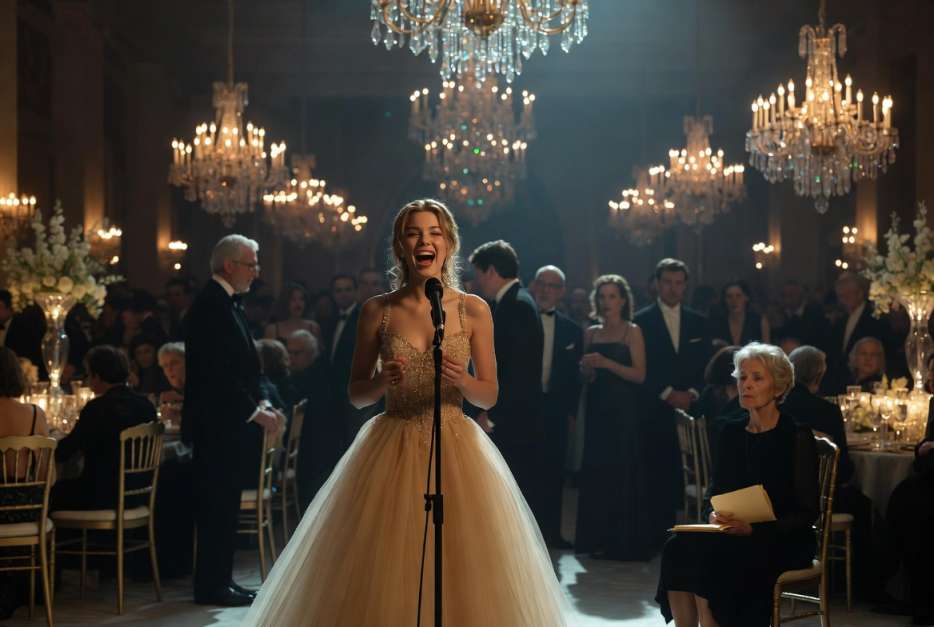
I felt it in my ribs first. A dull, familiar ache that had nothing to do with the cheap folding chair they’d tucked me into near the service door. Crystal chandeliers dripped light across two hundred designer dresses and tailored suits. The scent of roasted duck and aged cabernet hung thick in the air. Laughter bubbled up from the front tables where Victoria presided like a queen on her throne.
My daughter stood on the low stage in a champagne-colored gown that probably cost more than my mortgage for a year. Her hair—always her best feature—caught the light in soft waves. She looked radiant. Victorious. Exactly the way she’d always wanted the world to see her.
Then Victoria rose, silk rustling, diamonds flashing at her throat. “Frankly, she’s the biggest failure in this family.”
The room erupted. Genuine, delighted laughter. Someone even clapped.
I sat very still. The folder in my purse pressed against my hip like a secret heartbeat. No one noticed my fingers sliding the clasp open. No one saw the edge of manila peeking out. They were too busy feasting on my humiliation.
Let them.
The party was meant to celebrate Emma and Ryan’s dream mansion—a glass-and-steel monstrosity overlooking the hills, complete with infinity pool and a home theater bigger than my entire first apartment. A hundred and twenty guests. Live jazz trio. Valet parking. Every detail calculated to scream we’ve arrived.
I had arrived too. In the back. Wearing the same black dress I’d worn to her college graduation—the one she’d rolled her eyes at then, and clearly still hated now.
Emma adjusted the mic with a little laugh, as if her cruelty had been playful banter. “Before we continue, I’d like to thank everyone who actually helped us reach this moment.”
The word “actually” hooked into me like a fishhook.
Ryan, her husband, leaned back in his chair with that easy, predatory grin. He was handsome in the way expensive things are—polished, sharp, and cold to the touch. His mother, Victoria, beamed up at them both, her hand resting possessively on her son’s shoulder.
“My mother always believed hard work was enough,” Emma continued, her smile widening as she looked straight at me. A few people chuckled knowingly.
Heat crawled up my neck, but I didn’t look away. I let her see me watching. Really watching.
“Unfortunately,” she went on, voice lilting like she was delivering a TED Talk, “hard work without vision usually keeps people… average.”
Laughter rolled across the room again, louder this time. A woman two tables over whispered something behind her hand. Her companion glanced my way and smirked.
Emma wasn’t done. She never was when she had an audience.
“My husband and his family taught me what real success looks like.” She gestured gracefully toward Ryan and Victoria. “Mom still lives in the same little house she’s had for thirty years. Some people are comfortable staying small.”
Victoria stood, smoothing her dress with theatrical grace. “Emma, darling, don’t be too hard on her.” Then she turned those ice-blue eyes on me. “Not everyone is meant to achieve great things.”
The whispers started. Poor woman. How embarrassing for her. I heard my name float through the crowd like smoke—Margaret… always so quiet… never quite fit in…
I lowered my gaze to the tablecloth. Let the shame settle over me like a cloak. Let them believe they’d won.
Because inside the folder were the wires. The offshore accounts. The emails. The photographs. The forensic accounting trail that linked Emma’s “visionary” startup, Ryan’s investment firm, and Victoria’s board seats to a network of shell companies funneling money through jurisdictions that didn’t ask questions. Millions. The kind of money that bought mansions and silence.
It had taken me four years. Night shifts at the hospital after my day job cleaning offices. Quiet conversations with former colleagues who still owed me favors. A retired forensic accountant who remembered how I’d sat with his wife during her final months. Piece by piece, I’d built it—not out of anger at first, but out of a mother’s desperate need to understand why the girl I’d raised had started looking at me like I was something to scrape off her shoe.
The jazz trio picked up again, oblivious. Servers wove between tables with trays of lobster risotto. I sipped my water—tap, not the premium sparkling they’d served to the VIPs—and waited for the perfect moment.
Emma raised her glass. “To family,” she said, the word dripping with irony only I could fully taste. “The ones who lift you up.”
Victoria clinked her glass loudly. Ryan pulled Emma close and kissed her temple, the picture of devoted husband. The room toasted them.
I stood slowly. My knees protested—years of double shifts had left their mark—but my hands were steady. The folder felt warm against my palm as I slipped it free.
No one noticed me at first. I was background, furniture, the faded photograph in the family album they never opened anymore. I walked between the tables, the low hum of conversation parting around me like water around a stone.
Emma saw me first. Her smile faltered for half a second—barely noticeable unless you’d spent thirty-two years memorizing every micro-expression on her face. The way her left eyebrow twitched when she was nervous. The way she touched her collarbone when she felt exposed.
“Mom?” she said into the mic, forcing lightness. “Come up here and say a few words?”
A trap. Another chance to humiliate me publicly. Make me stammer thanks for their “generosity” while they all watched.
I reached the stage steps. The spotlight caught me, harsh and unforgiving. Up close, I could see the faint lines at the corners of Emma’s eyes—the ones Botox hadn’t quite erased yet. Ryan’s jaw tightened. Victoria’s smile turned brittle.
I climbed the three steps. My heels—practical, scuffed at the toes—clicked against the wood. I took the microphone from my daughter’s suddenly cold fingers.
For a moment, I just looked at them. Really looked.
Emma, who used to crawl into my bed during thunderstorms and whisper that I’d always keep her safe. Ryan, whose “investment opportunities” had once seemed like a godsend when Emma’s first business teetered. Victoria, who had called me “family” exactly twice—once at the wedding, once when she needed my signature on some paperwork she claimed was “just a formality.”
The ballroom had gone expectantly quiet.
I opened the folder.
“Thank you, Emma,” I said, my voice low but carrying through the speakers. No tremor. No rage. Just the calm of someone who’d already grieved the daughter she thought she had. “For reminding me what matters.”
I pulled out the first page—a printed email chain—and held it up. Not for dramatic effect. Just enough for the front rows to see the letterhead.
“Since we’re celebrating family and success tonight,” I continued, “I thought we should be transparent. About everything.”
Ryan stepped forward. “Margaret, this isn’t—”
Victoria’s hand shot out, gripping his arm. Too late.
I began reading. Not the whole thing. Just enough. Key phrases. Dates. Amounts. Names. The room’s temperature seemed to drop ten degrees. Phones that had been recording the happy couple now pointed at me, screens glowing.
Emma’s face drained of color. Her perfect makeup couldn’t hide the way her lips parted in silent panic.
The first gasp came from somewhere in the middle tables. Then another. Whispers turned to murmurs, then to a low roar of shock.
I met my daughter’s eyes. Those same eyes that had once looked at me like I hung the moon.
“You taught me something important, sweetheart,” I said softly, only for her, though the mic caught every word. “Hard work without vision keeps people average. But vision without integrity? That destroys everything.”
Victoria lunged for the folder. I stepped back calmly. Security—hired for the event—hesitated, unsure whose orders to follow.
Ryan’s phone buzzed violently in his pocket. Then Emma’s. Victoria’s. A cascade of notifications lighting up the room as the first leaks hit the group chats and inboxes of people who mattered.
The jazz trio had stopped playing.
Dessert was never served.
What happened next wasn’t a scene. It was a unraveling. Slow. Viscous. The kind where every carefully constructed mask slips away in real time.
Emma reached for me—not in reconciliation, but desperation. Her manicured nails dug into my wrist. “Mom, please. We can talk about this.”
I looked down at her hand. The same hand I’d held through fevers and heartbreaks and that terrible night her father died.
I gently pried her fingers off.
“No, Emma,” I whispered. “We can’t.”
Outside, the night air was cool against my skin as I walked to my old Toyota in the valet line. Behind me, the ballroom had become a storm of raised voices, flashing cameras, and the unmistakable sound of empires beginning to crack.
I didn’t smile. Not yet.
But for the first time in years, the weight on my chest felt lighter.
The folder was empty now. The truth was out there, multiplying in the dark like spores.
And somewhere in that glittering wreckage, my daughter was learning what I had always known:
Some small houses hold bigger truths than any mansion ever could.
Chapter 2: The First Fracture
The valet attendant stared at Margaret as if she had stepped out of a different movie. Her old Toyota sat idling under the porte-cochère, its faded blue paint looking almost defiant against the parade of German luxury sedans. She pressed a crumpled twenty into his hand—her last cash until payday—and slid behind the wheel.
In the rearview mirror, the mansion’s ballroom windows glowed like a ship taking on water. Silhouettes moved frantically behind the glass. One of them might have been Emma.
Margaret’s hands didn’t shake until she reached the first red light two miles down the winding canyon road. Then the tremors came, deep and involuntary, the kind that start in the marrow. She pulled onto the shoulder, killed the engine, and let the night press in.
Thirty-two years. That’s how long she had carried this girl. Not just the pregnancy, the labor, the colic nights—but the belief that love could be enough. That showing up, every single day, even when bone-tired and grieving her husband’s ghost, would anchor Emma to something real.
A text lit up her phone.
Emma: Mom. Call me. Now.
Margaret stared at the screen until it went dark. Then she opened the voice memo app, pressed record, and spoke into the quiet.
“Note to self. July 17th. They laughed. All of them. And for the first time, I didn’t flinch.”
She drove home to the little house on Maplewood Lane—the same beige ranch she’d bought with Dan’s life insurance and her own stubbornness. The porch light was out again. She made a mental note to fix it tomorrow. Small things. Manageable things.
Inside, the air smelled of lemon cleaner and old books. She kicked off her heels, poured two fingers of the cheap bourbon she kept for nights like this, and sat at the kitchen table where Emma used to do homework under the warm circle of lamplight.
The folder was gone, but its ghosts remained.
Back at the mansion, the celebration had curdled into something uglier.
Emma stood in the center of the storm, phone glued to her ear, voice pitched low and frantic. “No, it’s not public yet—Mom, what the hell did you do?”
Ryan paced near the bar, his usually impeccable hair disheveled. He snapped at a waiter who offered him water, then immediately apologized with the polished charm that had closed so many deals. Victoria had commandeered a corner table, her fingers flying across her own phone, calling in favors from people who owed her more than loyalty.
“Damage control,” Victoria hissed to no one in particular. “This is nothing but a jealous woman’s fantasy. Margaret never understood the risks we take for progress.”
But her voice wavered on the last word. Because Victoria knew—had always known—exactly which lines they had crossed. She simply believed the world belonged to those brave enough to redraw them.
Emma finally lowered her phone. Her mascara had started to run, twin dark rivers that made her look suddenly, painfully young. She pushed through the thinning crowd toward the exit, Ryan falling in step beside her. Victoria followed at a measured distance, the queen retreating with dignity.
They found Margaret’s number on speed dial. It rang. And rang. Voicemail.
Emma’s thumb hovered over the screen. For a moment, the mask slipped completely. The ambitious entrepreneur vanished, and in her place stood the little girl who once cried because she’d broken her mother’s favorite mug.
“Ryan,” she whispered, “what if it’s real? What if she actually has everything?”
He pulled her close, but his body was rigid. “Then we remind her who she’s dealing with. She’s always been soft, Em. One conversation. One check. She’ll fold.”
Victoria’s laugh was brittle. “A check? Darling, at this point we may need to remind her of certain… family obligations. The ones she signed without reading.”
Margaret woke at 4:17 a.m. to the sound of a car door outside.
She didn’t turn on the lights. Instead, she moved to the front window, peering through the slit in the curtains. Emma’s sleek black Range Rover sat at the curb, engine running. Ryan leaned against the hood, arms crossed. Emma stood on the walkway, staring at the house like it was both sanctuary and prison.
Margaret watched her daughter raise a hand, hesitate, then knock softly. Three times. The way she used to knock when she came home late from high school and didn’t want to admit she’d been crying.
Margaret opened the door but left the chain on.
Emma looked wrecked. Expensive dress wrinkled, hair escaping its pins, eyes red-rimmed. “Mom. Please.”
Ryan hovered behind her like a shadow. Victoria remained in the car, watching.
Margaret studied them—the way Ryan’s jaw clenched, the way Emma’s fingers twisted the strap of her clutch. She unlatched the chain but didn’t step aside.
“You have two minutes.”
They crowded into the small living room. The contrast was grotesque: Emma’s diamonds against Margaret’s threadbare couch, Ryan’s Italian loafers on the rug Dan had picked out at a flea market thirty years ago.
Emma started first. “I didn’t mean any of it tonight. You know that. The pressure… the speech… I got carried away.”
Margaret said nothing. She simply watched.
Ryan tried charm. “Margaret, we’re family. Whatever you think you found, I’m sure it’s a misunderstanding. Let’s sit down like adults. Name your number. We can make this right.”
Victoria had slipped inside now, closing the door behind her with a soft click. “We built something extraordinary, Margaret. Something that employs hundreds of people. You wouldn’t want to destroy that over… hurt feelings.”
The word hurt landed like a slap.
Margaret walked to the side table and picked up a framed photo—Emma at eight, gap-toothed, holding up a drawing of their family. All stick figures holding hands under a yellow sun.
“You erased me,” Margaret said quietly. “Not just tonight. For years. Every holiday photo without me. Every interview where you talked about ‘self-made’ success. Every time you told people your mother ‘didn’t understand business.’”
Her voice didn’t rise. It didn’t need to.
“But I understood enough to keep copies of every wire transfer. Every email where Ryan instructed accountants to ‘make it disappear.’ Every memo Victoria signed greenlighting the offshore vehicles.”
Emma’s breath hitched. “Mom… I was going to bring you in. Later. When things stabilized.”
The lie tasted like ash even as she spoke it.
Margaret set the photo down. “I worked two jobs so you could chase your dreams. I gave you my savings when your first company almost folded. And when you succeeded, you looked at me like I was an embarrassment. Like my love was a chain instead of wings.”
Tears slipped down Emma’s cheeks now. Real ones. The kind that come from somewhere deeper than strategy.
Ryan stepped forward, voice hardening. “This is emotional blackmail. We have lawyers. We have resources you can’t imagine.”
Victoria smiled thinly. “And we have influence. One call and your little hospital job disappears. Your reputation. Everything.”
The threat hung in the air.
Margaret met Victoria’s eyes. For the first time, the older woman saw something she hadn’t expected: not fear, but a deep, exhausted certainty.
“I already lost my daughter,” Margaret said. “There’s nothing left for you to take.”
She walked to the door and opened it.
Emma reached for her arm. “Mom, wait. I love you. I—”
The words cracked.
Margaret looked at her daughter’s hand, then gently removed it. “Love isn’t a bargaining chip, Emma. Not anymore.”
As they stepped back into the night, Margaret watched from the doorway. Ryan was already on his phone, voice low and urgent. Victoria stared back at the house like she wanted to burn it down.
Emma turned once, halfway down the path. Their eyes met across the distance.
In that moment, Margaret saw it—the flicker of the little girl who used to believe her mother could fix anything. And the woman who had learned to survive by forgetting that belief.
The Range Rover pulled away.
Margaret closed the door, leaned against it, and let the tears come. Not for them. For the girl she had lost. For the mother she had tried so desperately to be.
Her phone buzzed again. An unknown number.
She answered.
A calm male voice on the other end. “Ms. Margaret Hayes? This is Alan Whitaker from the U.S. Attorney’s Office. We received the materials you forwarded. We’d like to speak with you. Soon.”
Margaret closed her eyes.
The fracture had begun.
And the real storm was only now gathering on the horizon.
Chapter 3: Echoes in the Wires
The U.S. Attorney’s Office smelled of burnt coffee and old paper. Margaret sat in a windowless conference room at 7:42 a.m., the same black dress from the night before now wrinkled and carrying the faint scent of her own fear-sweat. Across the table, Alan Whitaker—a man in his late fifties with wire-rimmed glasses and the patient eyes of someone who had seen every shade of human greed—flipped through the folder she had delivered at dawn.
“You understand what this means, Mrs. Hayes?” he asked quietly.
Margaret nodded. Her fingers traced the edge of the table, feeling the cheap laminate, grounding herself. “It means my daughter may go to prison.”
Whitaker didn’t sugarcoat it. “It means a lot of people may. This isn’t just creative accounting. This is structured fraud with international tentacles. The kind that funds things better left in the dark.”
He slid a photograph across the table. A grainy image of Ryan at a waterfront café in the Caymans, laughing with a man whose name had appeared in too many sealed indictments. Margaret studied it, searching for any flicker of the son-in-law she had once tried to welcome.
Nothing. Only the calculated charm that had always felt one degree too warm.
Outside the building, the city woke up. Horns blared. A bus hissed to a stop. Life continued, indifferent to the quiet apocalypse unfolding in this sterile room.
Emma hadn’t slept.
She stood in the unfinished kitchen of the new mansion, barefoot on Italian marble that still carried the chalky smell of fresh grout. Dawn light sliced through floor-to-ceiling windows, painting everything in merciless gold. Ryan barked orders into his phone in the next room. Victoria had already flown out—damage control in D.C., she’d said, but Emma knew better. Her mother-in-law was securing the lifeboats.
Emma opened the refrigerator. Rows of untouched gourmet meals stared back at her. She slammed it shut and pressed her forehead against the cold steel.
Mom.
The word tasted foreign now. Not the polished “Mother” she used in public, but the raw, childish Mom that belonged to scraped knees and bedtime stories and the smell of coffee brewing before dawn shifts.
She remembered the night her father died. Margaret had held her through the shaking, whispering promises that they would be okay, that love was stronger than loss. Emma had believed her then.
When had she stopped?
Her phone vibrated. An unknown number. She almost didn’t answer.
“Emma Caldwell?” A woman’s voice, professional but edged. “This is Sarah Kline from the Financial Chronicle. We’re running a story tomorrow on alleged irregularities at Meridian Ventures. Care to comment?”
Emma’s stomach dropped. The first leak.
She hung up without speaking. Then she called her mother.
Straight to voicemail. Again.
Margaret sat on a bench in a small park two blocks from the federal building, watching pigeons fight over crumbs. Her phone had been ringing nonstop. She let it. For the first time in decades, she felt the strange freedom of having nothing left to lose.
A notification pinged. Not a call this time—a news alert.
Breaking: Federal Investigation Opens into Prominent Investment Firm Linked to Real Estate Heiress
Her thumb hovered. She didn’t click it. Instead, she opened her photos and scrolled back to an old one: Emma, age twelve, covered in flour, laughing as they failed spectacularly at baking a birthday cake for Dan’s memory.
The ache was physical, a fist around her heart.
Her phone rang again. This time she answered.
“Mom.” Emma’s voice cracked on the single syllable. “Please. I’m begging you. Meet me. Just us.”
Margaret closed her eyes. The park sounds faded—the distant traffic, children laughing on the playground, a dog barking. All that remained was the sound of her daughter breaking.
“Twenty minutes,” she said. “The old diner on Maple. The one we used to go to after your piano lessons.”
She hung up before Emma could respond.
The diner smelled exactly the same: grease, coffee, and decades of quiet desperation. Margaret took the corner booth where they had once celebrated Emma’s straight-A report cards. She ordered black coffee and waited.
Emma arrived twelve minutes later, alone. No makeup. Hair in a messy ponytail. She looked like the girl who used to steal fries from Margaret’s plate.
She slid into the booth opposite her mother. For a long moment, neither spoke.
“I didn’t know it went this far,” Emma finally whispered. “Ryan said it was standard. Victoria said everyone does it. I… I trusted them.”
Margaret stirred her coffee slowly, the spoon clinking like a metronome. “And when they told you to stop answering my calls? When they laughed at my ‘little life’? Was that standard too?”
Emma flinched. “I was ashamed. Of where I came from. Of how hard you had to work. It felt… small.”
The word landed between them like a stone in still water.
Margaret leaned forward. The vinyl booth creaked. “I scrubbed floors so you wouldn’t have to. I ate ramen for weeks so you could have new books. And you stood on that stage and called me average.”
Tears spilled down Emma’s cheeks. She didn’t wipe them away. “I’m sorry. God, Mom, I’m so sorry. I’ll fix this. I’ll testify. Whatever you want. Just… make it stop.”
Margaret studied her daughter’s face. The desperation was real. The fear too. But underneath it, something else flickered—calculation, perhaps. Or the first fragile shoots of genuine regret. It was too early to tell.
“I already made my choice,” Margaret said softly. “The papers are with the authorities. The rest is out of my hands.”
Emma reached across the table and grabbed her mother’s wrist. Her grip was tight, almost painful. “They’ll destroy you too. Victoria has people. Ryan… he’s not who I thought. None of this is what I thought.”
A shadow fell across the table.
Ryan stood at the entrance, flanked by two men in dark suits who didn’t look like lawyers. His face was a mask of controlled fury. He started toward them.
Emma’s eyes widened in panic. “Mom, run.”
But Margaret didn’t run. She simply stood, placed a twenty on the table for the coffee, and looked at her daughter one last time.
“Choose, Emma,” she said. “Before the choice is made for you.”
As she walked past Ryan, he leaned in close enough for her to smell his expensive cologne. “You have no idea what you’ve started.”
Margaret met his gaze without blinking. “Neither do you.”
She stepped out into the bright afternoon light. Her heart hammered, but her steps were steady.
Behind her, raised voices erupted inside the diner. Emma’s. Ryan’s. The sound of a chair scraping back.
Her phone buzzed with a text from an unknown number.
We know where you live. Think carefully.
Margaret deleted it. Then she opened her contacts and dialed Alan Whitaker.
“It’s starting,” she said when he answered. “They’re coming.”
As she drove away, the rearview mirror caught the first hint of a black SUV pulling out behind her. Two cars back. Following.
The little house on Maplewood Lane suddenly felt very far away.
And the woman who had spent decades protecting her daughter was about to discover exactly how far she was willing to go to protect what remained of herself.
Chapter 4: The Weight of Choices
The black SUV stayed three cars back, professional but not invisible. Margaret noticed it in her peripheral vision as she merged onto the highway—the way it matched her speed through traffic, the tinted windows swallowing sunlight. Her hands gripped the steering wheel until her knuckles ached. The old Toyota’s engine hummed its familiar, tired rhythm, a sound that had carried her through night shifts and grocery runs and every quiet year of being erased.
She didn’t panic. Panic was a luxury she had surrendered long ago, somewhere between the second job and the third missed school play. Instead, she took the exit for the hospital where she still worked part-time in administration, weaving through side streets until the SUV disappeared behind a delivery truck.
Only then did she pull into the underground parking garage, kill the engine, and rest her forehead against the wheel.
Her phone had become a weapon of its own. Missed calls from Emma. Voicemails from numbers she didn’t recognize. One text from an unknown sender: This doesn’t have to get ugly.
Margaret deleted them all. Then she opened the voice memo app again.
“Note to self. They’re scared. Good.”
Emma stood alone in the master bedroom of the new mansion, the one with the view that stretched across the valley like a kingdom. The bed was still unmade from the night before—silk sheets tangled like evidence of a life that now felt borrowed. She clutched her phone, thumb hovering over her mother’s number.
Ryan burst in, tie loosened, eyes wild in a way she had rarely seen. “The board is calling emergency meetings. Two major investors just pulled out. Victoria says we need to liquidate the Caymans accounts before they freeze them.”
He stopped when he saw her face. “Em. Baby. You didn’t call her again, did you?”
Emma turned away, staring out at the infinity pool where they had planned to host their first summer party. The water shimmered mockingly in the afternoon light. “She’s my mother, Ryan.”
“She’s a liability.” His voice softened, but the edge remained. He came up behind her, hands on her shoulders. “We built this together. You, me, Mom. Don’t let guilt rewrite history. Margaret never understood the risks. She still thinks the world runs on hard work and fairy tales.”
Emma shrugged his hands off. For the first time, his touch felt like chains rather than support. “And what if she’s right? What if we crossed lines we can’t uncross?”
Ryan’s laugh was sharp. “Lines? Sweetheart, success is crossing lines. Your mother scrubbed toilets. We create jobs. Empires. History doesn’t remember the cautious.”
He pulled her into a kiss—possessive, urgent. Emma let it happen, but her mind was elsewhere. In a small beige kitchen where her mother had once taught her how to make pancakes in the shape of hearts.
Margaret met Alan Whitaker again in a different location this time—a nondescript coffee shop on the outskirts of the city. He arrived in a plain sedan, looking more like a tired accountant than a federal prosecutor.
“They’re moving assets,” he told her, sliding a redacted document across the table. “Fast. Your daughter’s name is all over the early filings, but we’re seeing signs she may not have been the architect.”
Margaret sipped her coffee. It tasted like ash. “Does that matter?”
“To a jury? Maybe. To her future? Absolutely.” Whitaker studied her. “You still have time to pull back, Margaret. Witness protection is on the table if things escalate. But once the indictments drop…”
He let the sentence hang.
Margaret looked out the window. A mother pushed a stroller down the sidewalk, laughing at something her toddler said. The ordinary beauty of it pierced her.
“I spent my life protecting her,” she said quietly. “Even when she didn’t want it. Maybe this is the last thing I can do for her. Force her to face what she became.”
Whitaker nodded with the respect of a man who had seen too many broken families. “You’re a brave woman.”
“No,” Margaret replied. “Just a tired one.”
That evening, the little house on Maplewood Lane felt smaller than ever. Margaret changed into comfortable clothes—old jeans and one of Dan’s faded flannel shirts that still carried a ghost of his scent after all these years. She made herself a simple dinner: scrambled eggs and toast. The normalcy grounded her.
A knock came at the door just as she finished eating.
She approached cautiously, peering through the peephole.
Emma stood on the porch. Alone. Rain had started to fall, soaking her hair and the lightweight jacket she wore. No designer gown tonight. Just a daughter, looking lost.
Margaret opened the door but kept the chain latched.
Emma’s voice was raw. “I left him. For tonight, at least. I told Ryan I needed air. Mom… I read some of the files you sent the authorities. I didn’t know the full extent. The people we hurt. The pensions. The families.”
Tears mixed with rain on her cheeks.
Margaret felt the pull—the ancient instinct to comfort, to fix, to let her baby back in. But she stayed behind the chain.
“Knowing now doesn’t erase then,” she said. Her voice was gentle but firm. “You chose them over me every single day. Publicly. Painfully.”
Emma pressed her palm against the door. “I was wrong. Arrogant. Cruel. I saw your love as weakness because it didn’t come with board seats and private jets. I’m so sorry.”
The words hung between them, fragile as spun glass.
Margaret unlatched the chain.
Emma stepped inside, dripping rain onto the familiar rug. She didn’t hug her mother. She simply stood there, arms wrapped around herself, looking at the photos on the wall—dozens of them, documenting a childhood Margaret had preserved even when her daughter tried to outrun it.
“I want to help,” Emma whispered. “I’ll give them everything. Statements. Passwords. Whatever it takes.”
Margaret studied her. The girl was cracking open, but cracks could be weaponized. “And Ryan? Victoria?”
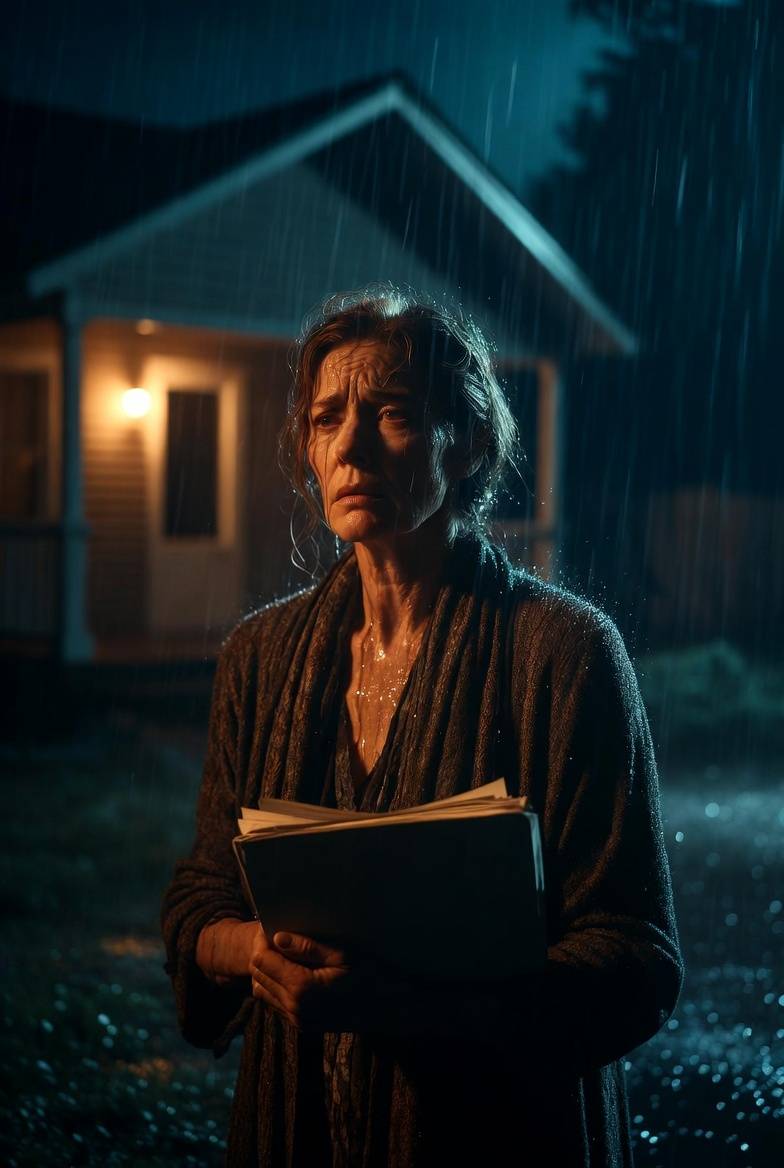
Emma’s laugh was bitter. “They’re already planning how to spin this. How to make me the face if it all collapses. Victoria said I was ‘the perfect scapegoat’ if needed—young, ambitious, impressionable.”
The betrayal in her voice was new. Real.
For the first time in years, Margaret felt a flicker of hope. Not for reconciliation—that wound was too deep—but for the possibility that the girl she loved wasn’t entirely gone.
She made Emma a cup of tea. They sat at the kitchen table, the rain drumming steadily on the roof. Emma talked. Not the polished version, but the messy one: the pressure, the fear of failure, the way Ryan and Victoria had filled the void left by Margaret’s “smallness” with visions of grandeur.
Margaret listened. She didn’t forgive. But she listened.
Until the headlights swept across the front window.
A car pulled up fast. Doors slammed. Footsteps on the porch.
Ryan’s voice called out, loud and edged with panic. “Emma! Open the door. We need to talk.”
Victoria’s sharper tone followed: “Don’t be stupid, girl. This family stays together.”
Emma froze. Her eyes met her mother’s—wide, terrified, pleading.
Margaret stood. She walked to the hall closet and pulled out the old baseball bat Dan had kept for protection. Not for swinging. Just for holding.
She looked at her daughter. “Choose, Emma. Right now.”
The knocking turned to pounding.
Outside, the rain fell harder. Sirens wailed faintly in the distance—maybe unrelated, maybe not.
Emma rose slowly. She glanced at the door, then back at her mother.
Her hand reached for the knob.
The question in her eyes was clear: Which side are you on?
Chapter 5: Blood in the Rain
The pounding on the door shook the frame like a heartbeat gone wrong.
Emma’s fingers hovered over the knob, trembling. Rain lashed the windows in silver sheets, turning the porch light into a smeared halo. Margaret stood three feet behind her, the old baseball bat loose in her grip—not raised, just present. A reminder that love had limits, even a mother’s.
“Emma!” Ryan’s voice cracked through the wood, raw and commanding. “Don’t do this. She’s poisoning you. We’re your family.”
Victoria’s tone cut sharper, colder, the voice of boardrooms and backroom deals. “Open the door, darling. We fix things together. Or we lose everything together.”
Emma turned. Her eyes—those same eyes that once lit up at the sight of her mother’s tired smile—were wide with the terror of a woman watching her carefully built life collapse in real time. Water dripped from her hair onto the faded linoleum, pooling like spilled secrets.
“Mom,” she whispered. “If I open it, they’ll pull me back in. If I don’t…”
She didn’t finish. She didn’t need to.
Margaret felt the old instinct rise again—the one that had carried her through lonely nights and empty bank accounts. Protect her daughter. But this time it warred with something harder, sharper: the need to protect what little remained of herself.
She stepped forward, voice low and steady as the rain. “You don’t open that door for them. You open it for you.”
Emma’s breath hitched. Her hand dropped. She backed away from the door, toward her mother, until their shoulders brushed.
Outside, the pounding stopped. For three heartbeats, silence. Then the sound of glass breaking in the back—kitchen window.
Ryan was inside.
He moved fast, water streaming off his expensive coat, eyes scanning the small space like a predator assessing unfamiliar territory. Victoria followed more slowly, heels clicking on the linoleum, her expression a mask of maternal concern wrapped around steel.
“Emma,” Ryan said, softening his voice as he approached. “Baby, look at me. This woman has been manipulating you since the moment she sent those files. Guilt is her weapon.”
Victoria’s gaze flicked to Margaret, dismissive. “We gave you opportunities, Margaret. You chose resentment. Now you’re burning everything down like a child with matches.”
Margaret didn’t raise the bat. She set it against the wall with deliberate calm, the clack loud in the small room. “You gave my daughter ambition without conscience. That’s not opportunity. That’s poison.”
Emma stood between them, shaking. The girl who had toasted to success in ballrooms now looked like she might shatter under the weight of both worlds.
“I saw the files,” she said, voice barely above the rain. “The pensions. The families who lost everything. Ryan… you told me it was standard. You said no one gets hurt.”
Ryan’s laugh was ugly. “No one important. That’s how this works, Em. The world isn’t your mother’s fairy tale. It’s a ladder. We climbed it.”
He reached for her arm. Emma jerked back, colliding with Margaret.
In that collision—shoulder to shoulder, breath to breath—something shifted. Margaret felt it. The years of distance cracking like ice under spring thaw. Not forgiveness. Not yet. But recognition.
“Get out,” Emma said suddenly, turning on them. Her voice gained strength. “Both of you. I’m done.”
Victoria’s eyes narrowed. “You ungrateful little—”
The sirens were louder now. Closer. Red and blue lights pulsed through the curtains, painting the walls in violent color.
Ryan’s face twisted. “You called them?”
Margaret shook her head. “No. But someone did.”
Alan Whitaker’s words echoed in her mind: They’re moving assets. Fast.
Victoria moved first, grabbing Emma’s wrist with surprising strength. “You’re coming with us. Now. We’ll sort this mess as a family.”
Emma pulled free. “I’m not your pawn anymore.”
Ryan lunged—not at Emma, but past her. Toward Margaret. His hand closed around her upper arm, fingers digging in hard enough to bruise. The scent of his cologne mixed with rain and rage.
“You started this,” he snarled, face inches from hers. “You think you’re some hero? You’re nothing but a bitter old woman who couldn’t keep up.”
Pain flared in Margaret’s arm, but she didn’t flinch. She looked him dead in the eyes—eyes that had once charmed her at family dinners—and spoke with the quiet weight of every sacrifice he had mocked.
“I kept up. I just refused to sell what you did.”
The front door burst open. Federal agents in dark jackets flooded the small house, weapons drawn, voices sharp with commands. “Hands up! Everyone on the ground!”
Chaos erupted in the tiny kitchen. Ryan released Margaret and tried to bolt toward the back. An agent tackled him hard against the refrigerator. Victoria stood frozen, hands raised, her perfect composure finally cracking into something feral and afraid.
Emma dropped to her knees beside her mother, hands shaking as she helped Margaret steady herself. Their eyes met in the flashing lights.
“I’m sorry,” Emma whispered again. This time it carried the raw ache of someone who finally saw the cost.
Margaret touched her daughter’s cheek, rain and tears mixing on the skin. “Sorry isn’t enough, baby. But it’s a start.”
Outside, the rain kept falling, washing nothing clean. Handcuffs clicked. Victoria’s voice rose in indignant protests about lawyers and connections. Ryan stayed silent, calculating even in defeat.
As agents led them out, Emma stayed behind with her mother. The house felt both smaller and larger—crowded with ghosts and sudden, fragile possibility.
But in the doorway, one agent paused, looking back at Margaret with a grim expression.
“Ma’am… there’s more. We traced additional accounts. Ones tied to your daughter’s name exclusively. Shell companies she signed off on without Ryan or Victoria’s knowledge. Looks like she wasn’t just along for the ride.”
Emma’s face went white.
Margaret felt the floor tilt.
The girl who had just chosen her mother carried deeper shadows than anyone had realized.
The real fracture wasn’t between families.
Chapter 6: What Remains
Three months later, the courtroom smelled of polished wood and quiet dread. Margaret sat in the back row, hands folded in her lap, wearing the same black dress from the night everything shattered. This time, no one laughed. No one whispered poor woman. The chandeliers were gone. The only lights were harsh fluorescents that left no shadows to hide in.
Emma stood at the witness stand, pale but composed. She had cut her hair shorter—practical, unadorned. No designer gown, no armor of wealth. Just a woman in a simple gray suit, speaking truths that cost her everything.
“I signed the documents,” she said, voice steady though her fingers gripped the rail. “I knew enough to know it was wrong. I told myself it was necessary. That success demanded it. I was wrong.”
Her eyes found Margaret’s across the crowded room. For a long moment, the world narrowed to that single thread of connection.
Ryan sat at the defense table, jaw tight, staring straight ahead. Victoria had taken a plea—testifying against others in exchange for leniency—but her influence had already begun to erode like sandcastles at high tide. The empire was gone. The mansion foreclosed. The dream dissolved in federal ink.
The judge’s gavel sounded. Sentencing would come later. For now, the machine of justice turned slowly, grinding futures into new shapes.
They met at the old diner one last time.
Rain fell softly outside, the same steady rhythm that had accompanied the night Ryan and Victoria had stormed the little house. Margaret ordered black coffee. Emma ordered the pancakes—heart-shaped, though the cook’s attempt looked more like broken circles.
They ate in silence at first. Words had become expensive.
“I got six months,” Emma said finally, pushing a piece of pancake around her plate. “House arrest after that, with community service. Teaching financial literacy to at-risk kids, ironically.”
Margaret nodded. She reached across the table and adjusted the collar of Emma’s sweater—a small, instinctive mothering gesture. Emma let her.
“I’m selling the house on Maplewood,” Margaret said quietly. “Too many memories. Too small for what comes next.”
Emma looked up sharply. “Where will you go?”
“I don’t know yet.” Margaret smiled faintly, the first real one in months. It carried the weight of survival. “Somewhere with a garden. Maybe a dog. Places where no one knows what I did. Or what you did.”
The silence returned, but it was different now—less like a wound, more like a scar still tender to the touch.
“I hated you for a while,” Emma confessed, voice low. “Not for turning us in. For making me look at myself. Really look. I saw a stranger in the mirror every morning after that night.”
Margaret’s eyes glistened, but she didn’t cry. She had cried enough in empty rooms. “I hated myself too. For holding on too tight. For not seeing sooner what you were becoming. We both broke something.”
Emma reached for her mother’s hand. This time, Margaret let her take it. Their fingers intertwined—different rings, different scars, same blood.
“I’m not asking for forgiveness,” Emma whispered. “Not yet. Maybe not ever. But I want to earn the chance to try. If you’ll let me.”
Outside, the rain eased. A sliver of sunlight broke through the clouds, catching the wet pavement in a brief, dazzling gleam.
Margaret squeezed her daughter’s hand once, then released it.
“We’ll see,” she said. “One day at a time. No more mansions. No more stages. Just… us. Whoever we are now.”
Six weeks later, Margaret stood in the driveway of the little beige house, loading the last box into her new used SUV. A modest car for a modest new beginning. The For Sale sign swayed gently in the breeze.
Emma waited on the porch, hands in her pockets, ankle monitor a faint bulge under her jeans. She had driven herself here—first solo trip since the sentencing.
“You sure about this?” Emma asked as Margaret closed the trunk.
Margaret looked at the house one final time. The porch light she had finally fixed. The kitchen window where pancakes had once been made. The place where love had both saved and broken them.
“No,” she answered honestly. “But I’m sure I can’t stay.”
Emma walked her to the driver’s side. They embraced—awkward at first, then fierce. Two women who had survived each other.
“Call me when you get there,” Emma said. “Wherever there is.”
Margaret nodded. She climbed in, started the engine, and rolled down the window.
“I loved you enough to let you go,” she said, voice catching. “Now love yourself enough to become someone worth coming back to.”
The SUV pulled away. In the rearview mirror, Emma stood smaller and smaller, hand raised in something between wave and surrender.
Margaret drove west, toward mountains and unknown roads. The radio played an old song she and Dan had danced to in the living room long ago. She didn’t turn it off.
Behind her lay ruins and reckonings. Ahead lay silence, healing, and the slow work of becoming.
Emma watched until the car disappeared around the corner. Then she touched the monitor on her ankle, looked back at the empty house, and whispered to the empty air:
“I’m trying, Mom.”
The rain had stopped completely. The sun climbed higher. Two separate futures stretched out under the same sky—connected by fragile threads, uncertain but unbroken.
Neither woman knew what tomorrow would hold.
But for the first time in years, both chose to face it anyway.
The End