The Los Angeles Lakers secured a 101–94 victory over the Houston Rockets in Game 2 of their playoff series, taking a 2–0 lead as the matchup shifts to Houston. The game featured a high-profile meeting between two of the NBA’s most accomplished scorers, but the outcome was ultimately shaped by team structure, defensive adjustments, and contributions from rotation players.

The return of Kevin Durant to the Rockets’ lineup elevated attention around the individual matchup narratives, particularly his direct competition with LeBron James. However, the broader result reflected how both teams adapted strategically around injuries, lineup changes, and defensive priorities.
Game context and competitive structure
Both teams entered the series managing key absences, forcing coaching staffs to rely on adjusted rotations and expanded roles. The Lakers, in particular, have had to navigate lineup changes due to injuries affecting multiple primary contributors, resulting in increased responsibility for secondary players in starting positions.
Despite these challenges, Los Angeles established early control of the series through consistent defensive execution and timely offensive production across multiple positions.
Defensive adjustments and possession control
A defining element of Game 2 was the Lakers’ defensive approach in the second half, which emphasized pressure on Durant through varied coverage schemes and multiple defenders. After an efficient first half scoring performance, Durant’s involvement was significantly reduced in the final two quarters as Los Angeles shifted its defensive strategy.
From a statistical perspective, the Lakers generated increased disruption through turnovers and contested possessions, limiting Houston’s half-court efficiency and reducing their ability to establish rhythm offensively. This shift in possession quality became a key factor in the final margin.
Role player impact and offensive balance
Beyond star-level production, the Lakers benefited from significant contributions from Marcus Smart and Luke Kennard, who were required to operate in expanded roles due to roster limitations. Their combined offensive output, along with defensive activity, provided structural balance during key stretches of the game.
Marcus Smart’s perimeter defense and transition decision-making played a central role in limiting opposing scoring opportunities, while Luke Kennard contributed spacing and secondary playmaking that supported the Lakers’ half-court efficiency.
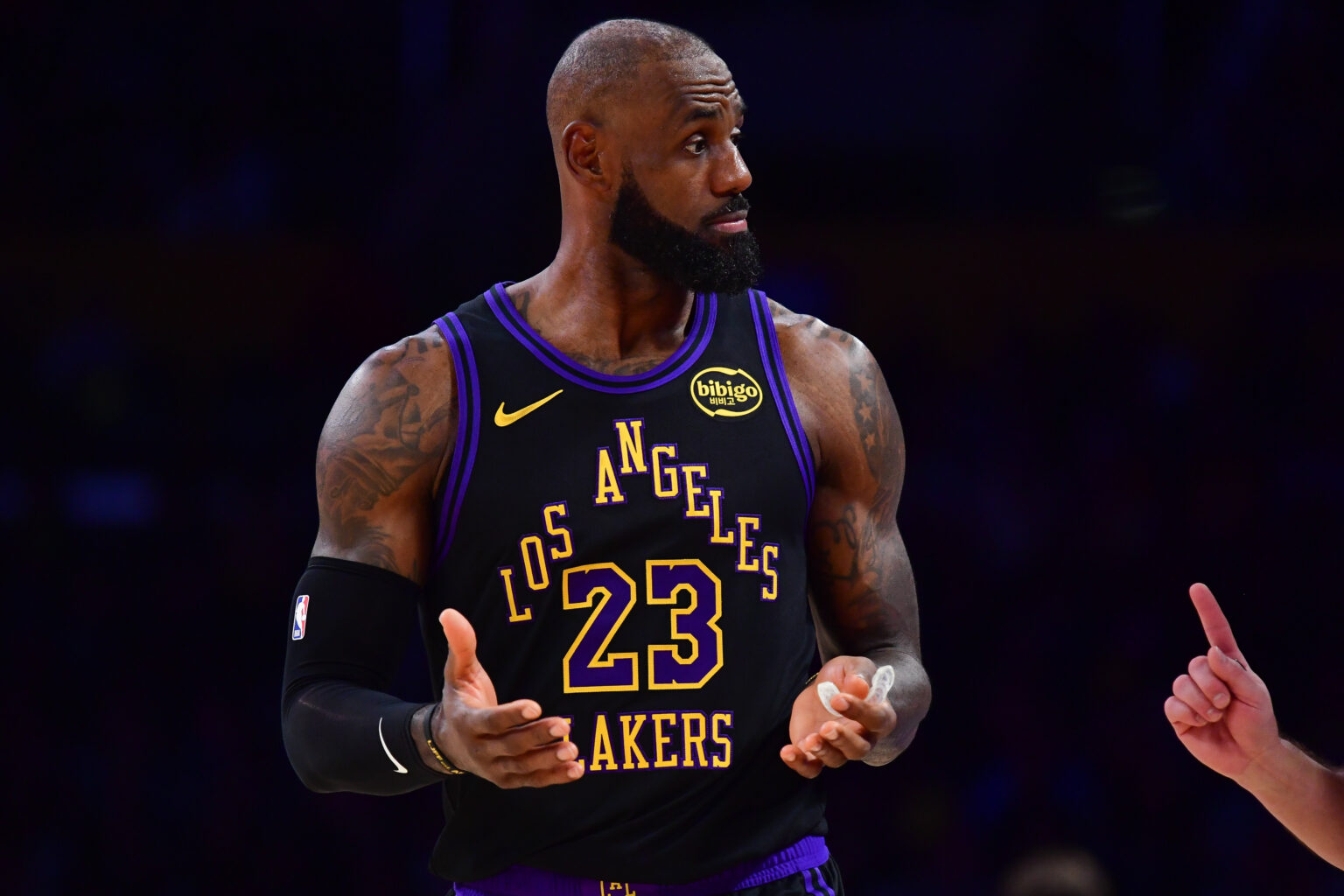
LeBron James also contributed across multiple statistical categories, maintaining his role as a central offensive and organizational presence within the team structure. His performance reflected continued usage in high-leverage game situations, particularly in late-game possession management.
Analytical perspective: defense, adaptability, and team systems
From a systems analysis standpoint, this game highlighted how playoff outcomes are increasingly influenced by adaptable defensive schemes and role player reliability rather than isolated individual matchups.

Sports performance analysts often emphasize that postseason success depends heavily on “possession efficiency” — the ability to maximize offensive output while minimizing opponent scoring opportunities across multiple lineup combinations. In this context, the Lakers’ defensive rotation adjustments and bench integration illustrate a broader strategic model focused on flexibility and situational response.
Psychological and competitive dynamics
From a sports psychology perspective, games of this nature often test cognitive endurance, adaptability, and decision-making under pressure. When star matchups dominate public attention, role players can experience increased performance pressure, particularly when asked to execute outside their usual usage rates.

At the same time, defensive intensity and in-game adjustments can shift momentum in ways that influence confidence cycles for both teams. Analysts frequently note that sustained defensive success can create compounding psychological effects, particularly when opposing offensive systems are forced into repeated disruption.
Strategic implications moving forward
As the series transitions to Houston, both teams face adjustments related to spacing efficiency, turnover control, and shot selection consistency. The Rockets will look to stabilize offensive execution and improve perimeter shooting efficiency, while the Lakers will aim to maintain defensive pressure across multiple lineups.
The series now raises broader competitive questions regarding roster depth, adaptability under injury conditions, and the extent to which defensive identity can sustain postseason success.
What remains to be seen is how each team adjusts its structural approach as the series continues—and whether tactical changes or personnel performance will ultimately define the direction of the matchup.