The Los Angeles Lakers established a 2–0 lead in their first-round playoff series against the Houston Rockets following a 101–94 victory in Game 2. The result comes within a competitive postseason environment shaped by roster availability challenges and in-game tactical adjustments on both sides. Los Angeles has managed to maintain early control of the series despite the absence of key contributors such as Luka Dončić and Austin Reaves, relying on depth contributions and structured defensive execution.
From a coaching perspective, head coach JJ Redick’s approach has emphasized defensive discipline and matchup management throughout the series. The Lakers’ ability to adapt rotations and maintain consistency on both ends of the floor has played a significant role in limiting Houston’s offensive rhythm across the first two games.
Game structure and performance distribution
Game 2 featured a balanced scoring distribution from Los Angeles, with multiple players contributing to offensive efficiency and possession control. LeBron James led the team in scoring with 28 points, continuing his role as a primary decision-maker within the offensive system. His workload reflects ongoing reliance on veteran leadership within a roster currently adjusting to injury-related absences.
The Lakers’ overall performance also included significant contributions from Marcus Smart and Luke Kennard, who operated in expanded roles due to lineup changes. Their offensive production and defensive engagement provided structural support during key stretches of the game, helping stabilize possession flow and spacing.
Second-half defensive adjustments and possession control
A notable shift in Game 2 occurred in the second half, where the Lakers implemented more aggressive defensive coverage and rotational switching to disrupt Houston’s half-court execution. These adjustments reduced scoring efficiency and limited consistent offensive rhythm from the Rockets during critical stretches.

From a statistical standpoint, possession control and defensive pressure played a decisive role in shaping the final outcome. Turnover generation and contested shot frequency became key indicators of momentum control, particularly in late-game sequences.
Athletic performance within a veteran framework
LeBron James continued to operate within a high-usage role while maintaining efficiency across multiple phases of play. In addition to scoring output, his involvement included facilitating offensive sets and contributing to transition opportunities. His performance reflects ongoing adaptation within a long-term professional career that has shifted toward strategic energy management and situational impact.
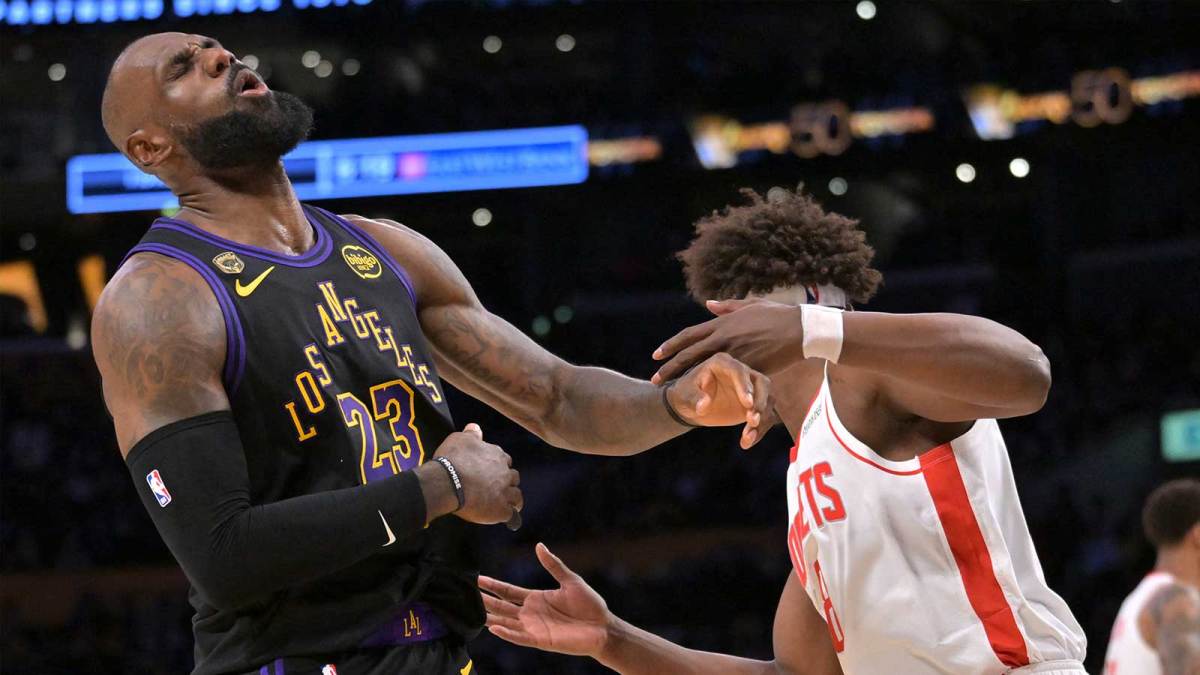
Within this context, isolated highlight plays are often viewed as part of broader athletic variability rather than defining game outcomes. The Lakers’ system continues to balance veteran experience with rotational contributions from role players in order to sustain competitive performance across full game structures.
Analytical perspective: team systems and playoff dynamics
From a sports systems analysis standpoint, this series highlights the importance of roster adaptability and defensive consistency in postseason environments. Analysts often emphasize that playoff success is increasingly determined by depth utilization, rotational stability, and the ability to adjust defensive schemes across multiple possessions.
In addition, the psychological demands placed on teams operating under injury constraints can influence decision-making efficiency and execution consistency. Sports performance research frequently notes that reduced roster depth increases cognitive load on remaining contributors, particularly in high-pressure playoff scenarios.

Ethical and competitive considerations in professional sports
This series also reflects broader discussions within professional basketball regarding roster construction, player availability, and competitive balance. The reliance on depth players in expanded roles raises questions about long-term roster sustainability and how organizations evaluate readiness in high-stakes environments.
From an organizational standpoint, teams must balance short-term competitiveness with long-term player health management, particularly when multiple key contributors are unavailable. These considerations continue to shape how franchises structure rotations and manage in-game workloads.
Series outlook and strategic implications
As the series shifts to Game 3 in Houston, both teams face strategic adjustments related to spacing efficiency, defensive matchups, and offensive consistency. The Rockets will aim to improve execution in half-court sets and reduce disruption under pressure, while the Lakers will focus on maintaining defensive structure and rotation balance.
The series remains in an early stage, with several tactical and personnel variables still influencing potential outcomes.
What remains central to the discussion moving forward is how roster depth, coaching adjustments, and in-game decision-making will define competitive balance as the series progresses into its next phase.