The Los Angeles Lakers have taken a 2–0 lead in their first-round NBA playoff series against the Houston Rockets following a 101–94 win in Game 2. The matchup has unfolded in a postseason environment heavily influenced by roster availability, injury management, and in-game tactical adjustments across both teams.
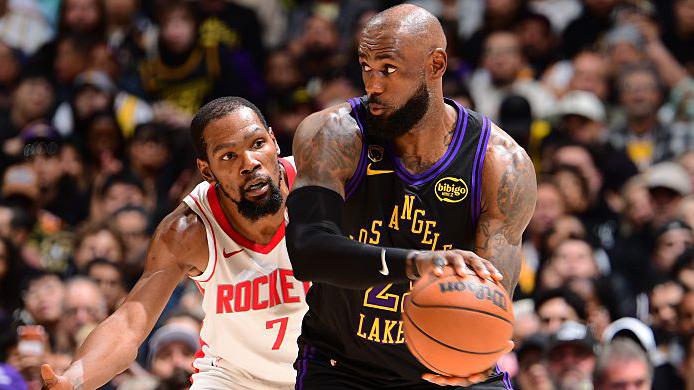
Los Angeles has managed to maintain early series control despite missing key offensive contributors Luka Dončić (hamstring) and Austin Reaves (oblique). Their absence has required adjustments in rotation structure and increased responsibility across the remaining active roster, particularly in late-game decision-making and offensive organization.
From a competitive standpoint, veteran forward LeBron James continued to serve as a central figure in the Lakers’ execution. His performance included 28 points, eight rebounds, and seven assists, reflecting sustained involvement in both scoring and facilitation roles within the team’s offensive system. The Lakers’ win also extended their advantage in a best-of-seven series that now shifts to Houston for Games 3 and 4.
On the opposing side, Houston integrated Kevin Durant back into the lineup after his absence in Game 1. Durant led the team in scoring with 23 points but also faced increased defensive pressure, resulting in elevated turnover numbers and reduced scoring efficiency in the second half. Houston’s adjustments will be a key focus as the series moves forward.
Injury management and league health protocols
Beyond the Lakers–Rockets series, the broader playoff landscape has also been impacted by injury-related developments involving San Antonio Spurs forward Victor Wembanyama. During a separate postseason game against the Portland Trail Blazers, Wembanyama experienced a collision that resulted in a concussion evaluation and removal from play under NBA health and safety protocols.
League concussion procedures require a structured recovery timeline, including mandatory inactivity and medical clearance steps before return-to-play consideration. These protocols are designed to ensure standardized evaluation and minimize long-term health risks associated with head injuries.
Wembanyama’s availability moving forward will depend on compliance with these league-mandated medical guidelines, with San Antonio already having managed multiple absences for the player throughout the regular season. His presence remains a significant factor in the Spurs’ postseason structure and defensive identity.
Broader postseason context and performance distribution
Elsewhere in the playoffs, other series have reflected similar themes of roster depth and adaptability. Philadelphia’s rotation adjustments and Boston’s scoring distribution highlight how postseason outcomes are increasingly influenced by secondary production, lineup flexibility, and injury-related roster changes.

From a league-wide perspective, teams are being evaluated not only on star performance but also on their ability to maintain system continuity under constrained availability conditions. This includes coaching adaptation, bench utilization, and defensive consistency across multiple game scenarios.
Analytical perspective: psychological and systemic factors
From a sports psychology and organizational behavior standpoint, postseason environments place heightened cognitive and physical demands on players, particularly those assuming expanded roles due to injuries. Research in performance psychology indicates that decision-making efficiency and fatigue management become critical factors in high-pressure series where roster depth is reduced.
At the system level, NBA teams are increasingly required to balance competitive urgency with long-term health management strategies. The integration of medical protocols, recovery timelines, and workload distribution reflects a broader shift toward data-driven and health-conscious roster management.
Ethical and structural considerations in professional basketball
The intersection of injury management, player availability, and competitive balance continues to raise broader questions within professional basketball. League protocols, team decision-making, and medical oversight all contribute to how organizations navigate player health while maintaining postseason competitiveness.

These dynamics highlight ongoing discussions around how the league structures participation standards, enforces health protocols, and ensures fairness across teams dealing with varying levels of roster stability.
Series outlook and ongoing developments
As the Lakers–Rockets series shifts to Houston, both teams face strategic adjustments related to spacing efficiency, turnover control, and defensive matchups. Meanwhile, updates regarding injured players across the league will continue to influence rotation decisions and playoff outcomes.
With multiple series still evolving and key players under medical evaluation, the broader postseason landscape remains highly fluid.
How teams adapt their systems, manage player availability, and respond to health-related uncertainties will continue to shape the direction of the playoffs as they progress.