On June 11, 2024, at 6:11 p.m., David Russell Hoer, 69, was executed by lethal injection at the Eastern Reception, Diagnostic and Correctional Center in Bonne Terre, Missouri. He had spent more than 14 years on death row for the 2009 double murder of Angela Gilpin and her husband Rodney Gilpin in Jefferson City.
The case, marked by obsession, threats, and circumstantial evidence, ended with Hoer maintaining his innocence until the end while expressing love and a hope for heaven.
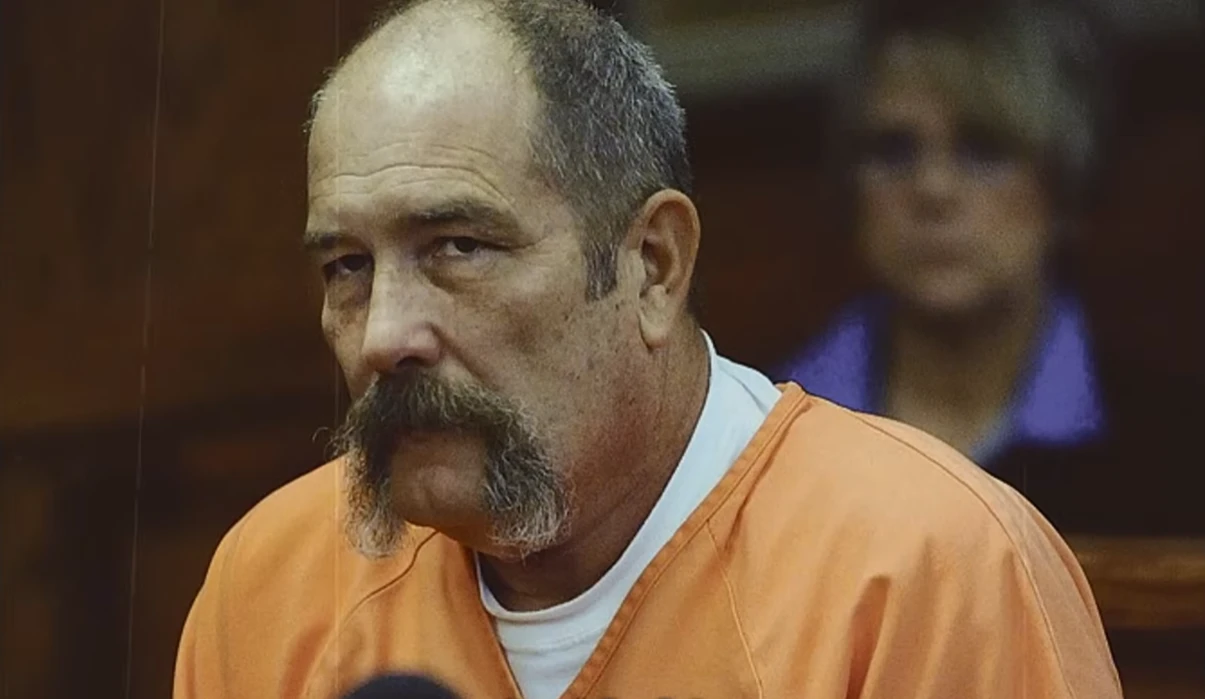
The Crime: A Jealousy-Fueled Double Murder
On September 28, 2009, David Hoer entered the Jefferson City apartment shared by Angela Gilpin, 45, and her husband Rodney Gilpin, 61. Near the doorway, he shot both of them to death.
Angela and Rodney had recently reconciled after a period of separation. Angela had ended a long-term affair with Hoer, a decision that, according to prosecutors, triggered his rage. Hoer had made repeated threats, telling others that if he could not have Angela, no one could. Angela had filed a petition for an order of protection, explicitly fearing that Hoer might shoot her and her husband.
A neighbor discovered the bodies the next morning.
Hoer fled Missouri immediately after the killings. Police tracked him to Oklahoma using cell phone data. When an officer attempted to pull him over, Hoer led authorities on a high-speed chase. When the pursuit ended, he stepped out of his vehicle with arms spread and taunted officers with the words, “Shoot me and get it over with.”
Inside the car, authorities found an arsenal: 15 firearms (including rifles and handguns), hundreds of rounds of ammunition, a bulletproof vest, and a Sten submachine gun believed to have been used in the murders. A handwritten note on the front seat read: “If you are going with someone, do not lie to them. If you do not, this could happen to you.”
Hoer was arrested and extradited to Missouri. He claimed he was simply on a long drive to clear his mind and professed no memory of the note.

The Trial and Conviction
At his 2013 trial in Cole County Circuit Court, prosecutors presented a strong circumstantial case: documented threats, the protective order Angela had filed, Hoer’s immediate flight with a cache of weapons, and his history of violence against women.
The defense attacked the lack of direct physical evidence—no DNA, fingerprints, or eyewitness identification definitively linking Hoer to the shooting. Ballistics tests on the seized firearms were inconclusive.
After a three-day trial, the jury deliberated for less than two hours before convicting Hoer of first-degree murder (for Angela’s death), armed criminal action, first-degree burglary, and unlawful possession of a firearm. Prosecutors had proceeded on only one murder count but presented evidence of Rodney’s killing for context.
Two days later, in the penalty phase, the jury unanimously recommended death. On November 27, 2013, the judge formally sentenced Hoer to death, plus additional consecutive prison terms.
Appeals and Final Years on Death Row
Hoer’s convictions were upheld at every level of appeal. The Missouri Supreme Court affirmed the sentence in 2015 and again in 2019. Federal courts, including the 8th Circuit, denied relief. In 2023, the U.S. Supreme Court declined to hear the case.
Throughout his time on death row at Potosi Correctional Center, Hoer maintained his innocence, arguing that the case rested entirely on circumstantial evidence. He expressed frustration that his final clemency appeal focused on his life history rather than proclaiming his wrongful conviction.
In May 2024, weeks before his scheduled execution, Hoer suffered a serious medical emergency, including heart failure and atrial fibrillation. He was hospitalized with severe pain, swelling, and difficulty walking or talking. Despite his frail condition, prison officials did not delay the execution date, planning accommodations such as local anesthetic before the injection.
The Final Day and Execution
On June 11, 2024, Hoer was given a final meal of New York strip steak, baked potato with butter and sour cream, Texas toast, Dutch apple pie, orange juice, and milk.
He spent his final hours with his spiritual adviser, Reverend Jeff Hood, and made phone calls to family and friends to say goodbye. He told the reverend he had put his faith in Jesus Christ and accepted whatever God had planned.
At 6:00 p.m., Hoer was strapped to the gurney wearing a white prison shirt and glasses. Witnesses, including eight of Angela and Rodney’s loved ones, watched from behind the glass.
In his final statement, Hoer said:
“I leave you all with love. Now I get to go to heaven. Don’t cry for me. Just join me when your time comes.”
He added that he felt like the luckiest man on earth because he had been able to tell the truth of his innocence and had learned to be the fullest version of himself even in prison.
As the pentobarbital was administered, Hoer turned his head a couple of times and took a few deep breaths. He then appeared to lose consciousness quickly. He was pronounced dead at 6:11 p.m.
Reactions and the Broader Debate
Angela and Rodney Gilpin’s family described the execution as bringing a somber sense of resolution after nearly 15 years, though they acknowledged no punishment could bring their loved ones back. Rodney’s sister, Rilene Vaughn, said David should be held accountable for what he did.
Governor Mike Parson’s office noted that Hoer had taken the lives of Angela and Rodney and shown no remorse for his callous conduct. State officials expressed hope that the execution would deter domestic violence and send a message about consequences.
Outside the prison, 52 protesters held a vigil, including members of Missourians to Abolish the Death Penalty. Reverend Jeff Hood criticized the system, asking how society could teach children not to kill by killing.
A Complex Case
David Hoer’s case was built largely on circumstantial evidence. No DNA or fingerprints definitively tied him to the crime scene, and ballistics tests were inconclusive. Supporters of the death sentence pointed to the overwhelming circumstantial case, Hoer’s campaign of terror against Angela, and his history of violence. Critics highlighted the lack of direct forensic evidence and questioned whether the death penalty was appropriate.
The execution marked Missouri’s second of 2024 and the seventh in the United States that year.
David Russell Hoer — the former firefighter and EMT who once saved lives, the son of a slain Indiana State Police sergeant, the Navy veteran — ended his life as the very thing his father had sworn to fight: a convicted murderer who paid the ultimate price for his crimes.
The story that began with obsession, threats, and a double homicide ended with a quiet injection and a final breath, leaving behind questions about justice, mercy, circumstantial evidence, and the death penalty that continue to divide society.
Rest in peace, Angela Gilpin and Rodney Gilpin. Their lives were taken in a moment of jealous rage, and their families carried that loss for nearly 15 years.
The final chapter is written. Whether justice was fully served remains a matter of deeply held personal and societal conviction.