I once spoke to a woman named Carol, 72 years old, who told me she hasn’t celebrated her birthday in over a decade. Not because she’s bitter or hiding from her age. Quite the opposite. She said, “Every morning, I wake up and say, this is the day that matters.
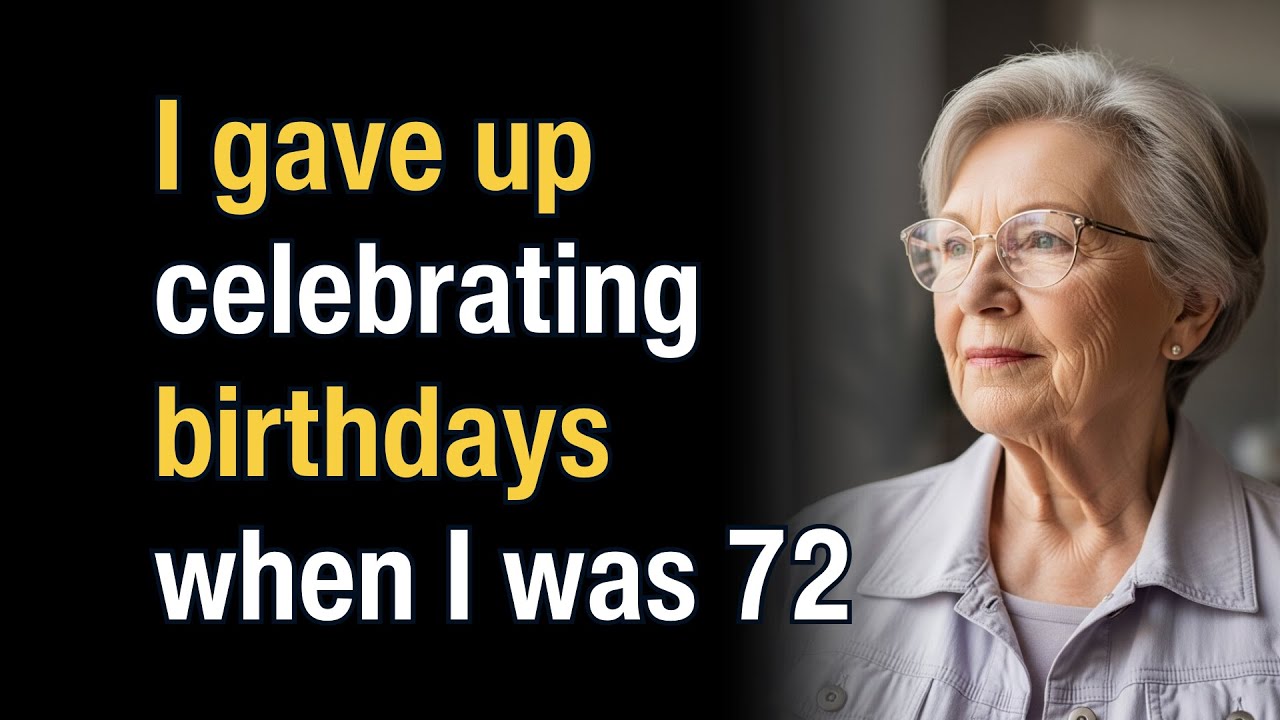
I don’t need one date to tell me that my life is important. ”
There’s a kind of wisdom in that, a quiet rebellion against the idea that only certain days are worth celebrating. And if you’ve ever wondered why some people skip the cake and the singing, it might be more than just personality. It might be a reflection of a mind that values the now over the number.
For many people, a birthday is like a mirror. It reflects how much others care. It becomes a day when we look for evidence that we’re loved, remembered, and seen. But for someone with a deeply rooted sense of self, that mirror isn’t necessary.
They don’t need balloons or parties to remind them that they matter. Their confidence is quieter. It doesn’t come from applause. It comes from within.
This comes down to what psychologists call a strong internal sense of identity. It means your sense of who you are doesn’t depend on what others say or do. You don’t need people to celebrate you in order to feel valuable. You already know your worth.
If you’ve ever thought, “I don’t need a party to feel good about myself,” that’s not a lack of joy. It’s self-assurance. It’s a beautiful kind of maturity. But there’s another layer to this.
It’s not just about how you see yourself. It’s also about how you see time itself. Most of us are taught to treat birthdays like little checkpoints. You turn 60, 70, 75, and suddenly you feel like you need to assess your life, set new goals, or measure your worth by what you’ve done in the past year.
But not everyone thinks that way. Some people don’t break life into chunks of 365 days. They see life as a continuous journey, not a calendar of deadlines. Growth isn’t something that happens once a year.
It happens quietly every day. This view of time is almost spiritual. It removes the pressure that birthdays can bring. No more measuring life by the number on a cake.
No more feeling like you’re behind or that you should have done more by now. Instead, it invites you to simply live, to breathe, to be, and to appreciate each moment without needing a special occasion to do so. Now, this brings us to something else many people don’t think about: the amount of emotional energy birthdays actually take. Even when it’s meant to be fun, a birthday can come with a surprising amount of pressure.
There are phone calls to answer, gifts to open, thank you messages to send, social gatherings to attend, and sometimes you’re expected to act more excited than you really feel. For people who are naturally more reflective or private, that kind of attention can feel exhausting, not joyful. In psychology, this is sometimes called social selectivity. And as we age, it often becomes more pronounced.
You may notice that you no longer enjoy large groups like you once did, or that certain social rituals feel more draining than meaningful. That’s not a flaw. It’s actually a healthy form of boundary setting. If you’ve ever said, “I’m just too tired to do all that this year,” you’re not being antisocial.
You’re being honest with yourself. Imagine being at a party thrown for you that you didn’t even ask for. Everyone means well, but you’re stuck pretending to enjoy it, managing conversations, smiling when you’re actually tired, and opening gifts you didn’t need. That’s not joy.
That’s emotional labor. Some people would rather have a quiet cup of coffee with one close friend than a big dinner with 20 acquaintances. Others prefer to take a long walk, reflect on their life, or even do something kind for someone else on their birthday. That’s not selfish or strange.
It’s a different kind of celebration, one that honors your peace, your rhythm, and your truth. We live in a world that praises extraversion, loud laughter, big gestures, group photos. But there’s quiet strength in turning inward, in saying, “I know what I need and I don’t need to explain it. ” That kind of self-awareness is a gift, and it tends to show up more often as we age.
We get clearer about what matters, and we stop forcing ourselves to meet everyone else’s expectations. Sometimes people ask, “But won’t others feel hurt if I don’t celebrate? ” And that’s a fair question, because part of growing older gracefully is also learning how to communicate those boundaries with kindness. You don’t have to push people away to honor your space.
A gentle, honest explanation often goes further than you think. You might say, “I really appreciate you thinking of me, but I found that I prefer to keep my birthday simple and quiet. ” That’s not rejection. That’s clarity.
And people who care about you will understand, especially when they see how peaceful and grounded you are in your choice. At the heart of it all, skipping your birthday doesn’t mean you don’t love life. It can actually mean the opposite. That you love it so deeply, you don’t need one day to remind you of it.
That every sunrise, every conversation, every quiet evening already feels like a celebration of being alive. It takes strength to go against the grain. It takes self-trust to say, “This is what works for me,” even when the world is telling you to blow out candles and make a wish. But the truth is, some of us already have what we wished for: a calm mind, a full heart, and the freedom to choose how we live.
Not celebrating your birthday doesn’t mean something is wrong. It doesn’t mean you’re hiding or that you’re distant or depressed. It doesn’t mean you’re antisocial or disconnected. Quite the opposite, it often means you’ve grown into yourself.
That you’ve built a life that doesn’t need loud validation to be real. In a world obsessed with milestones and markers, it’s refreshing and healthy to let go of the calendar for a moment and just be. To live your life in a way that doesn’t need to be measured by parties or presents. To honor your journey without needing to announce it.
You are not behind. You are not strange. You are not missing out. You are simply living in a way that feels right to you.
And that’s more than enough. There’s something deeply comforting about realizing that you don’t have to explain yourself anymore. Not to society, not to family, not even to old versions of yourself. And that’s especially true when it comes to something as personal as how you choose to spend your birthday.
For many people in their later years, there’s a quiet shift that happens. You start valuing peace more than performance. You begin to understand that your time and energy are not unlimited, and that every choice you make deserves to be intentional. When you decide not to celebrate your birthday, it’s often not a rejection of life.
It’s a refinement of it. You’ve already lived through enough chapters to know that meaning doesn’t come from noise. It comes from depth, from knowing who you are when no one is watching. From waking up in the morning and feeling at ease with yourself.
And that’s why it’s so important to say this clearly and gently: not celebrating your birthday is not a psychological problem. Some people worry that skipping birthdays means they’re becoming disconnected or that it’s a sign of sadness or loneliness. But in reality, many people who don’t celebrate are some of the most emotionally balanced individuals you’ll ever meet. They’re not withdrawn.
They’re centered. They’re not unhappy. They’re content. They’ve simply stopped outsourcing their sense of worth to the calendar.
You don’t need a special day to feel grateful for your life. You don’t need candles to reflect on how far you’ve come. You don’t need a room full of people to feel loved, because love at this stage of life is something you carry inside you. It’s in your memories, your resilience, your quiet victories, and your ability to sit with yourself without discomfort.
And that’s no small thing. If anything, this way of living shows emotional maturity. It shows that you’ve learned to listen to yourself instead of the noise around you. That you’ve learned the difference between connection and obligation.
That you understand celebrating life doesn’t always look like a party. It can look like a peaceful morning, a walk in the sunshine, a heartfelt conversation, or even a moment of silence that feels full rather than empty. Of course, if you do enjoy celebrating your birthday, that’s wonderful, too. There’s no right or wrong way to honor your life.
The point is choice. The freedom to decide what feels meaningful to you without guilt or explanation. And if your choice is simplicity, that deserves just as much respect. You might even find that by letting go of traditional celebrations, you open space for something deeper: more presence, more honesty, more peace.
When you’re no longer performing gratitude for others, you’re able to feel it more genuinely within yourself. When you’re no longer managing expectations, you’re free to live at your own pace. That freedom is one of the quiet gifts of aging that often goes unrecognized. So, if your birthday passes quietly and you feel calm instead of regret, trust that feeling.
It’s telling you something important. It’s telling you that you’ve grown into a place where your life doesn’t need a spotlight to be meaningful, where your existence doesn’t need applause to be valid. And if others don’t quite understand, that’s okay. You don’t need to convince them.
You’re not here to meet every expectation placed upon you. You’re here to live well, to live honestly, and to live in a way that feels true to who you are now, not who you were expected to be years ago. As you move forward, I invite you to reflect gently on this question: What does a meaningful life look like to you today? Not 20 years ago, not according to anyone else, but right now in this season of your life.
Because when you answer that question honestly, you’ll find that many of the things you once felt pressured to do simply fall away. And what remains is clarity, calm, and a deeper sense of self-respect.