Inside the cold, concrete confines of Nebraska’s death row, Niko Jenkins endures a nightmarish existence that many argue is worse than death itself. After a series of brutal murders in 2013, his life has become a relentless cycle of isolation and psychological torment, trapped in a world devoid of human connection or hope.
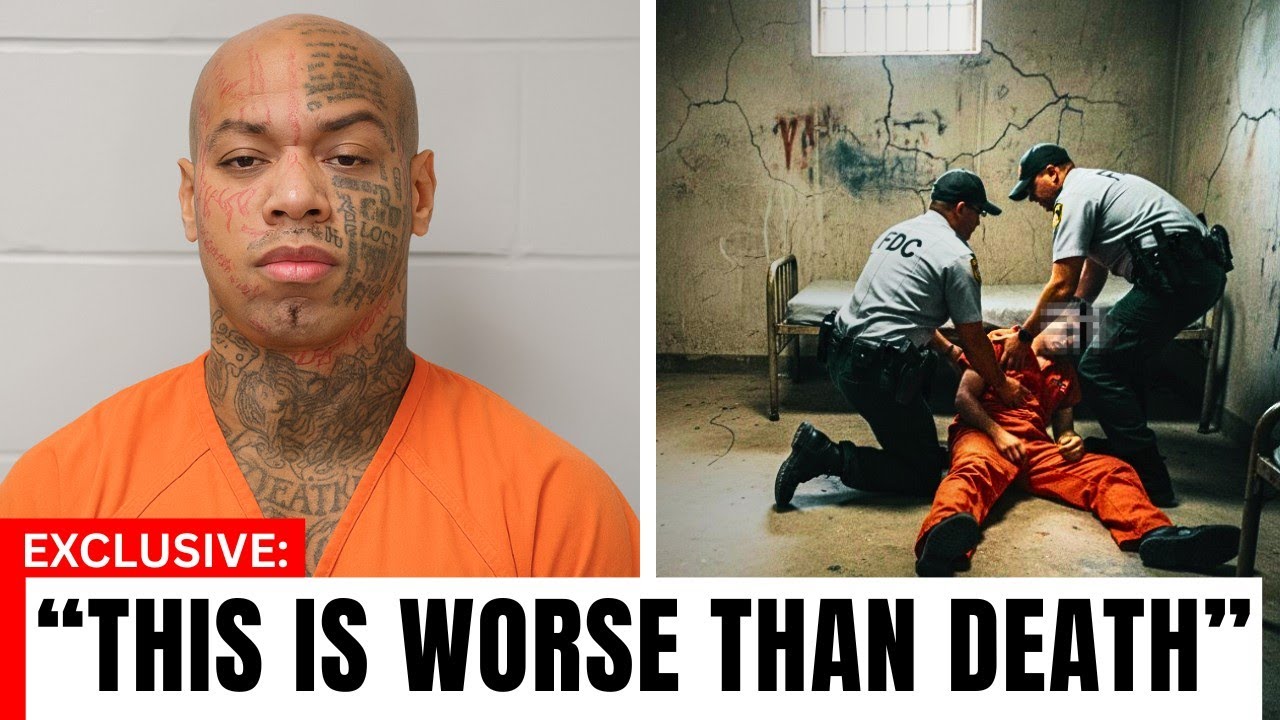 Jenkins, now a ghost of his former self, spends nearly every hour locked behind a steel door, cut off from the world. The silence that envelops him is not a refuge but a punishment, amplifying his inner chaos. Each day begins with the dull hum of fluorescent lights and the sterile sound of a food tray sliding through a narrow slot—a reminder of his solitary confinement.
Originally placed in the Nebraska State Penitentiary for his violent crimes, Jenkins’s unpredictable behavior and claims of divine orders led to his extreme isolation. Prison officials recognized early on that he was not just another inmate; he was a constant security threat. His bare, windowless cell became both his world and his punishment, a space where time blurs and sanity erodes.
As the years drag on, Jenkins’s mental health deteriorates further. Descriptions from prison staff paint a disturbing picture: pacing, shouting, and scribbling bizarre writings on the walls. The voices he claims to hear grow louder, and his behavior becomes increasingly erratic. He is a man trapped not only by steel bars but also by the demons of his mind.

Isolation is meant to control violence, yet for Jenkins, it has become a catalyst for chaos. Reports of self-harm, bizarre rituals, and violent outbursts fill the prison logs. He has smeared blood on walls, flooded his cell, and engaged in destructive behavior that terrifies both guards and fellow inmates. His reputation as a dangerous individual precedes him, making any interaction fraught with tension.
Despite the prison’s efforts to manage him, Jenkins continues to fight back against the system. His death sentence has not led to closure but rather a protracted legal battle filled with bizarre motions and claims of divine intervention. The courts remain entangled in a web of appeals, and the question of his mental competency lingers, prolonging his suffering.
Life on death row is far from what most envision. Jenkins is confined to a tiny cell, devoid of human contact, with only the sound of steel doors and distant voices to break the silence. His days are stripped to the bare minimum, a monotonous routine that amplifies his despair. The uncertainty of his fate weighs heavily on him, a psychological burden that eclipses even the thought of execution.
In this limbo, Jenkins exists in a world where time stands still. Each morning is a repeat of the last, with no updates or timelines to offer hope. The psychological strain of waiting—knowing that death could come at any moment yet never knowing when—has shattered many minds before him. For Jenkins, it is a cruel twist of fate.
As discussions about his case resurface in the public eye, opinions diverge sharply. Some view him as a victim of a flawed system, while others see him as the embodiment of evil. His name still sends chills across Nebraska, a haunting reminder of the brutality of his crimes and the torment of his punishment.
In the quiet corners of Nebraska’s death row, Niko Jenkins is not merely awaiting execution; he is trapped in a cycle of despair that strips away his humanity. The slow decay of his mind and spirit reveals a darker side of justice, one that raises profound questions about the nature of punishment and the limits of human endurance.