Inside the El Dorado Correctional Facility, the notorious BTK Killer, Dennis Rader, endures a life sentence that some argue is worse than death. Shackled in a 6×9 ft concrete cell, he faces the relentless torment of isolation, a decaying mind, and a body that is slowly giving in to the passage of time.
 Rader, who terrorized Wichita, Kansas, for three decades with his gruesome murders, was sentenced to ten consecutive life terms without parole in 2005. The judge’s decision to spare him the death penalty has left him to grapple with a fate that many would deem a living hell.
In the maximum-security prison, Rader spends 23 hours a day in solitary confinement, a stark contrast to the more humane conditions afforded to death row inmates. With no interactions beyond the guards who slide his meals through a narrow slot, he lives in a world stripped of human connection, reduced to the monotonous rhythm of prison life.
Each day blurs into the next, marked only by the passage of meals. The isolation is suffocating, and the psychological toll is evident. After nearly two decades, Rader’s health has deteriorated, with reports of strokes, severe scoliosis, and cognitive decline. His body, like his psyche, is breaking down in the confines of his concrete box.
Five days a week, he is allowed a mere hour of exercise, confined to another small, barren area. On weekends, he remains locked away for 24 hours straight, with no reprieve from the crushing silence. The absence of human interaction is palpable, and the lack of purpose weighs heavily on him.
Prison officials have granted him limited privileges, such as access to a television, a controversial decision that some view as unjust. Yet, this small concession serves as a lifeline, preventing the complete psychological collapse that could occur without any form of stimulation.
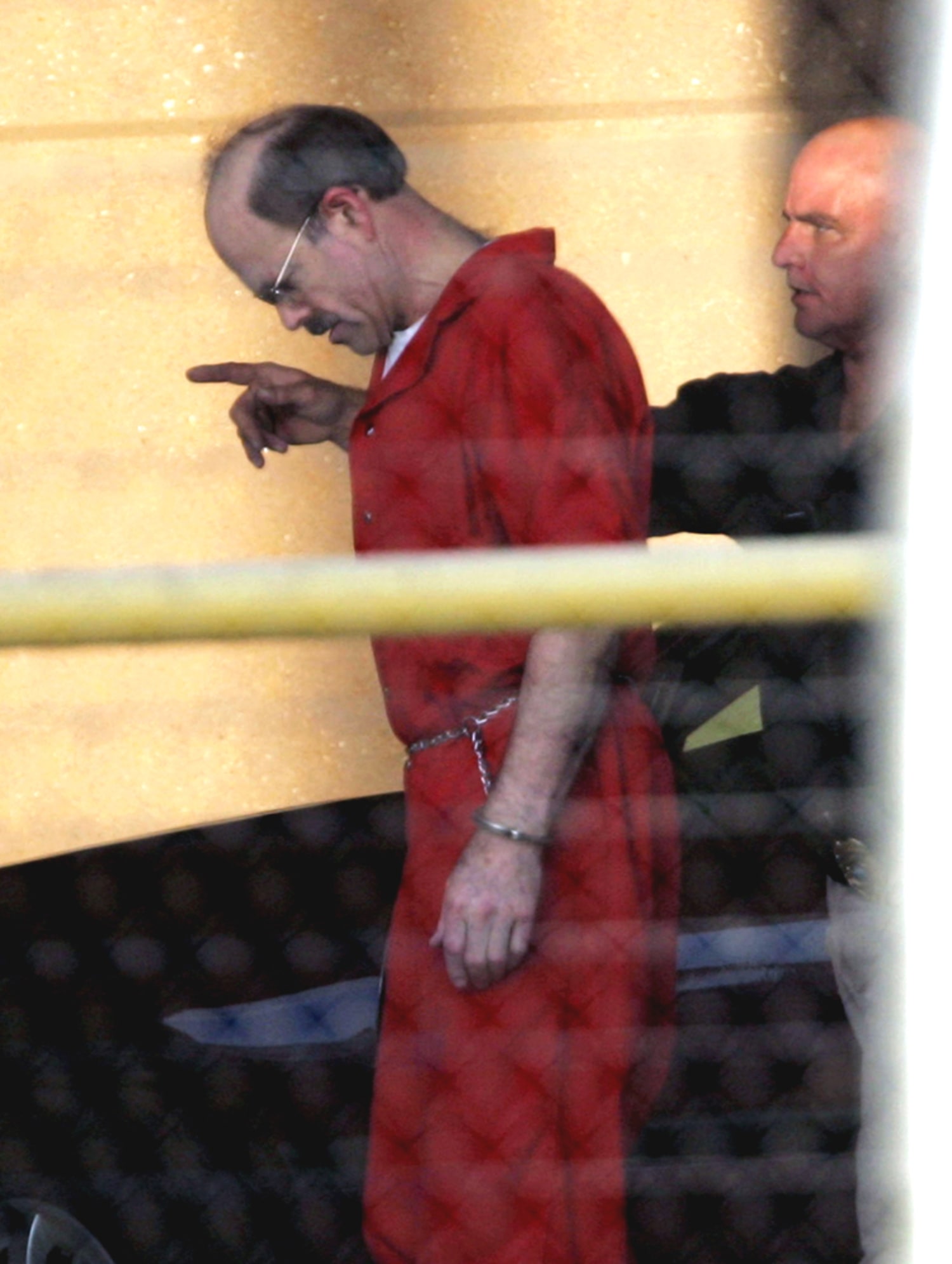
Rader’s existence is not just marked by isolation; it is haunted by the specter of his past. Investigations into unsolved murders from decades ago continue to plague him. Each inquiry serves as a reminder of the lives he shattered and the families left in anguish.
Correspondence with outsiders reveals a warped perspective; Rader maintains a sense of detachment from his crimes, referring to his darker self as the “minotaur.” His communications, filled with elaborate fantasies, blur the lines between reality and delusion, showcasing a mind that has compartmentalized its own horrors.
In 2023, Rader’s daughter visited him for the first time in 18 years, a meeting fraught with emotional complexity. He writes to her constantly, expressing longing for family, yet the man she sees is simultaneously a monster who inflicted unimaginable pain on others.
As Rader continues to serve his sentence, he remains a cautionary tale of the justice system’s complexities. The judge may have believed he delivered justice, but many now question whether this endless cycle of isolation and torment is a more fitting punishment than death.
With no hope for parole until the year 2180, Rader faces a future devoid of purpose, trapped in a cycle of despair. The distinction between punishment and torture blurs as he grapples with the reality of his existence—one marked by the slow, agonizing decay of both mind and body.
In the end, Rader’s life serves as a grim reminder of what it means to pay the ultimate price for one’s actions, condemned not to a swift end but to a protracted, agonizing decline within the unforgiving walls of a prison cell.