EL SEGUNDO, Calif. — The presence of multiple generations within professional sports has long been rare, but recent developments in the NBA highlight how legacy, player development, and organizational trust intersect within a modern team structure. The Los Angeles Lakers enter the 2026 postseason facing both competitive pressure and roster limitations, while also navigating the unique dynamic of having a father and son contributing on the same roster.

As the Lakers prepare for a first-round playoff series against the Houston Rockets, attention has shifted toward how younger players are integrated into high-stakes environments. Bronny James, now in his second NBA season, has seen increased playing time amid injuries to key teammates. His evolving role reflects not only individual progress but also broader questions about player readiness, team depth, and coaching strategy during the postseason.
Over the past month, Bronny’s minutes have steadily increased, positioning him as part of the Lakers’ active rotation. This shift has coincided with injuries to primary contributors, creating a scenario in which less-experienced players are required to perform under playoff conditions. For the coaching staff, these decisions involve balancing immediate competitive needs with long-term player development.
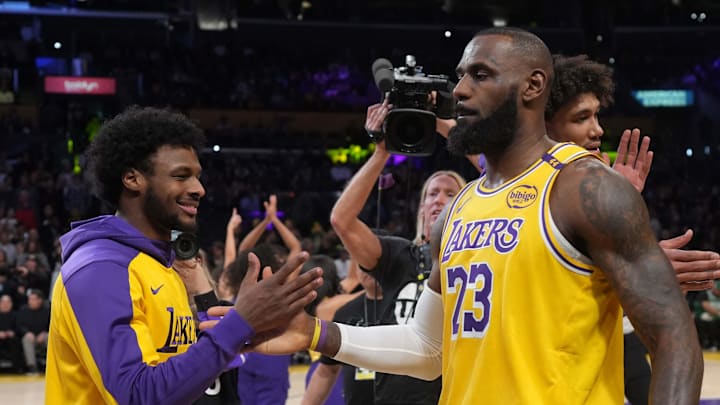
LeBron James, entering the later stages of his career, has publicly emphasized the significance of sharing the court with his son. While the moment carries personal meaning, it also reflects a broader organizational willingness to trust emerging players in critical situations.
“Every moment we get an opportunity to play together is something I never take for granted,” LeBron said during a recent practice session. He also noted that Bronny’s current position within the team is the result of consistent effort and preparation rather than circumstance alone.
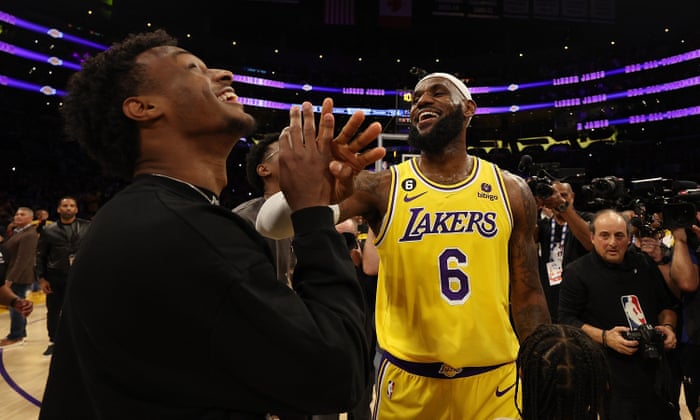
From a performance standpoint, Bronny’s recent contributions suggest measurable progress. He has logged 13 or more minutes in seven of the Lakers’ last 10 games, averaging close to 19 minutes in recent appearances. While increased opportunity has come partly due to injuries to Luka Dončić and Austin Reaves, coaching staff have indicated that his role is also merit-based.
Head coach JJ Redick confirmed that roster limitations will require full utilization of available players during the series. His comments emphasized skill development, particularly in shooting consistency and defensive positioning—areas where Bronny has shown improvement through both NBA and G League play.
“We’re going to have to have all hands on deck in this series,” Redick said. “I think Bronny has improved a lot. We trust him.”
Midway through the season, Bronny’s progression began to align more closely with typical second-year development curves. His defensive awareness, off-ball movement, and decision-making have been cited as key areas of growth. These attributes become especially relevant in playoff contexts, where execution and adaptability are closely scrutinized.
Performance Pressure and Psychological Adjustment
From a psychological perspective, Bronny’s situation presents a unique case study in performance under layered expectations. As both a developing athlete and the son of one of the NBA’s most prominent figures, he operates within overlapping pressures—team expectations, public scrutiny, and personal standards.
Sports psychologists often note that athletes in high-visibility family legacies must navigate identity formation alongside performance demands. Establishing autonomy within a team structure, while maintaining confidence in high-stakes moments, becomes critical. In Bronny’s case, increased minutes during the playoffs may accelerate this process, offering both opportunity and risk.
At the same time, the presence of a familial support system within the team environment may provide stabilizing effects. Familiarity with LeBron’s playing style and tendencies could facilitate on-court chemistry, potentially reducing adjustment time during critical possessions.
Organizational Strategy and Ethical Considerations
The Lakers’ approach also raises broader questions about team-building philosophy and perceived fairness in professional sports. While Bronny’s recent performance supports his inclusion in the rotation, discussions around opportunity, legacy influence, and meritocracy remain part of the public discourse.
In professional leagues, maintaining credibility in player selection is essential for both internal cohesion and external perception. Coaching decisions must consistently align with performance metrics and team needs to avoid undermining trust within the roster.
At the same time, the NBA has increasingly embraced narratives that blend legacy with competition, recognizing the commercial and cultural value of such moments. The balance between storytelling and competitive integrity continues to shape how teams manage unique situations like this one.

Bronny’s limited playoff experience—just four minutes in last year’s postseason—contrasts sharply with the expectations he now faces. His collegiate career was also abbreviated due to a health-related interruption, further limiting exposure to high-pressure tournament play.
“This is what I’ve wanted, to play in the playoffs,” Bronny said. “I’m excited to get out there with my teammates and try to compete.”
As the Lakers enter Game 1 without key backcourt players, his role may expand further. The extent to which he can adapt to playoff intensity will likely influence both game outcomes and future rotation decisions.
The possibility of a father-son connection during postseason play adds another dimension, but from a tactical standpoint, execution remains the priority. Bronny has indicated confidence in his ability to anticipate LeBron’s movements, suggesting potential synergy in live-game situations.
As teams increasingly navigate injuries, player development, and high expectations simultaneously, the Lakers’ current situation highlights the complexity of modern roster management. In a league where performance, narrative, and organizational strategy intersect, how should teams evaluate opportunity and readiness when legacy and competition converge on the same court?