Pooh Shiesty’s $12 million real estate empire has been dramatically unveiled following FBI raids and arrests in Memphis and Dallas, revealing a meticulously built portfolio amassed while the rapper served time in federal prison. This story exposes a rare financial strategy of legacy-building in hip hop amidst legal battles and incarceration.
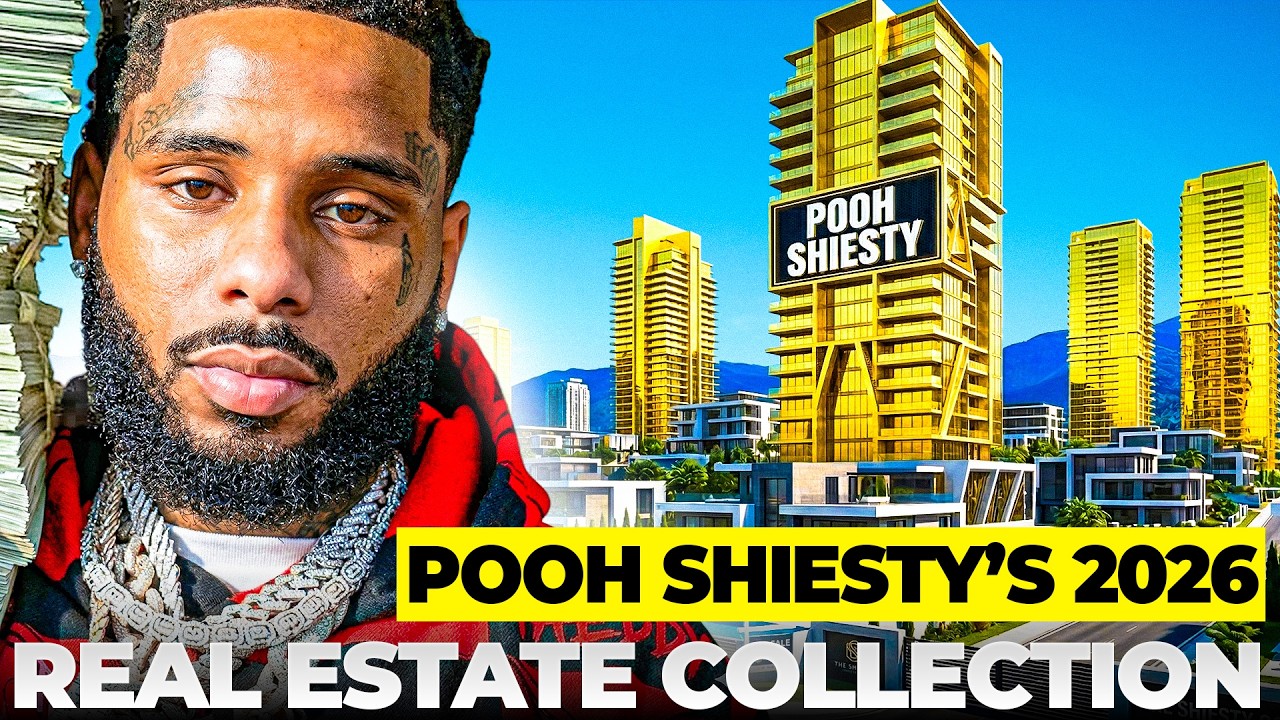 While many believed Pooh Shiesty’s career and wealth were doomed during his five-year federal sentence, the Williams family was quietly assembling a powerful real estate portfolio spanning Memphis and Texas. Every property — from a $656,500 Cordova family home to a $1.1 million mansion for his mother — tells a story of deliberate wealth preservation.
Lantrell Williams Jr., known as Pooh Shiesty, grew up in South Memphis and rose rapidly through the rap ranks before his 2021 incarceration on federal charges involving firearms and 𝒹𝓇𝓊𝑔 trafficking. Locked behind bars at USP Kanan, the secure Pennsylvania prison, his public career appeared paused indefinitely.
But behind the scenes, his father, Lantrell Williams Sr. aka Mob Boss, took command. Mob Boss, a Memphis streets legend and former club owner, converted Pooh Shiesty’s music earnings into real estate investments. These transactions were strategic and silent, executed to ensure a lasting foundation beyond the volatile music industry.
More than ten Memphis-area properties now hold the Williams family name, including residential and investment-grade homes in thriving neighborhoods. This portfolio wasn’t built out of impulse—it reflects generational wealth thinking. While Pooh Shiesty was incarcerated, legal documents show his father negotiating down prices and acquiring key assets, proving a high level of business acumen.
The family’s portfolio extends to Texas, where Pooh Shiesty was based in a luxury North Dallas Windrose Tower condo during his supervised re-entry program post-release in October 2025. Despite reports breaching lease agreements, this condo symbolizes the family’s refusal to accept anything less than a high standard of living amid ongoing federal scrutiny.
Pooh Shiesty’s first major move after release was to secure a $1.1 million home for his mother, a moment reflecting not just financial success but deep family values. This purchase, widely shared on social media, underscored how the Williams family’s wealth-building strategy ensured stability and uplifted those closest to them.
April 2026 brought a pivotal turning point as FBI raids descended on multiple Williams family properties. Pooh Shiesty and his father, Mob Boss, were arrested along with eight others in coordinated actions spanning Memphis, Dallas, and Nashville. These actions 𝓮𝔁𝓹𝓸𝓼𝓮𝓭 the real estate holdings previously hidden from public view.
Public records revealed the scope of the $12 million real estate empire assembled quietly over years. Property after property listed under Lantrell Williams’ name painted a clear picture: this was not a typical rapper’s flashy spending but a calculated effort to secure, protect, and grow family wealth through real estate.
This case shatters common hip hop narratives of fleeting fortunes lost to legal troubles or extravagant lifestyles. The Williams family defied the cycle, transforming volatile music revenues into appreciating, generational assets. Their blueprint offers lessons on financial literacy and long-term wealth preservation within the culture.
Mob Boss’s role was instrumental—understanding the precariousness of Pooh Shiesty’s success window, he acted decisively to safeguard family interests when the unexpected struck. Property acquisitions continued unabated during Pooh’s imprisonment, maintaining a financial lifeline that many artists fail to secure when facing incarceration.
The Williams family’s story challenges the culture’s focus on material showpieces by emphasizing ownership and sustainability. Their real estate holdings, registered under legal names and insulated from the ups and downs of a music career, represent tangible legacy assets that survive beyond day-to-day fame.
Though Pooh Shiesty’s legal battles remain ongoing and complex, the portfolio he returns to post-incarceration places him on firm footing. His return to rap will be supported by hard assets rather than fleeting chart success, potentially reshaping expectations for artists facing similar challenges.

The FBI’s exposure of these real estate transactions turned a private financial plan into a high-profile story about legacy, resilience, and intelligent wealth-building in hip hop. It uncovers a new paradigm far removed from the typical headlines dominating the genre.
This saga underscores an urgent question long debated in the industry: how can artists convert fleeting earnings into enduring wealth? The Williams family provides a textbook case of using street smarts and business savvy to defy systemic cycles of loss and instability.
For a culture notorious for rapid rise and fall, Pooh Shiesty’s family portfolio reveals the power of quiet diligence and multi-state real estate investments as a strategy for lasting impact and security. It’s a story that demands attention beyond the headlines of legal woes.
The Williams family never flaunted their acquisitions publicly; instead, they let music and status take the spotlight while quietly stacking assets. This strategic discretion is a hallmark of wealth preservation, only uncovered under federal investigation but decisive in safeguarding family futures.
With properties ranging from Memphis suburbs to Dallas luxury condos, the portfolio paints a picture of a family committed to maintaining standards despite adversity. The legal challenges have yet to conclude, but the financial groundwork is secure, marking a rare victory in turbulent circumstances.
Moments like the gift of the Mama Shy mansion symbolize more than wealth—they signify loyalty, promise-keeping, and the enduring bonds that motivate financial stewardship in a volatile cultural landscape. This emotional layer deepens the impact of their business moves.
Pooh Shiesty’s $12 million real estate portfolio disrupts stereotypes about hip hop wealth management, illustrating how legal setbacks need not erase financial progress if family and strategy are aligned. Their story is a blueprint for transforming fleeting success into permanent legacy.
As investigations continue and the court battles unfold, attention will now also stay on how Pooh Shiesty navigates the next chapter with this unprecedented asset base backing him. The real estate story has set the stage for a comeback grounded in 𝓈𝓊𝒷𝓈𝓉𝒶𝓃𝒸𝑒 and security.
The Williams family’s success presents a challenge to other artists and industry players: prioritize ownership, think generational, and build quietly but decisively. Their saga reframes how wealth is measured, shifting focus from what dazzles to what endures.
This breaking story combines the 𝒹𝓇𝒶𝓂𝒶 of federal raids and arrests with a powerful narrative of resilience and sophisticated financial planning rarely seen so openly in hip hop. It demands a reevaluation of how success and survival coexist in the modern music industry.
Pooh Shiesty’s journey from prison to property mogul exemplifies the power of family unity and strategic vision under pressure. Their $12 million portfolio is more than numbers—it’s a testament to beating the odds and rewriting the rules of hip hop wealth.

In sum, the Williams family’s story is a critical chapter in the ongoing conversation about how artists can protect their futures amidst unpredictable careers and legal turmoil. It’s a cautionary and inspiring tale for anyone watching the intersection of culture and commerce.
This revelation about Pooh Shiesty’s real estate holdings offers a bold new perspective on sustaining wealth beyond fame. It signals potential shifts in how hip hop artists might approach financial legacy in an industry notorious for rapid volatility.
The stakes remain high for Pooh Shiesty as legal proceedings proceed, but the strength of his family’s real estate foundation offers a ray of hope and a model for others. Their strategic investments demonstrate the importance of foresight in crafting enduring success.
This developing story maintains a fast-moving rhythm as new details emerge about the scope of property acquisition, federal scrutiny, and the ongoing balance of legal and financial challenges facing the Williams family.
Observers and insiders alike will be watching closely as Pooh Shiesty attempts to leverage this rare portfolio to not only revive his career but also change the narrative of hip hop wealth building forever.
The Williams family’s approach embodies a rare combination of street knowledge and business savvy, revealing how smart real estate investments can serve as the backbone of generational wealth in American urban culture.
As federal agents continue their investigations and the public digests the scope of this portfolio, the implications for asset protection in hip hop are profound, signaling new strategies for artists fearing legal and financial pitfalls.
The intricate, multi-state real estate network secured under the Williams family name symbolizes an evolution in how hip hop artists handle their financial futures, protecting gains against external pressures and ensuring legacy beyond fleeting success.
Ultimately, Pooh Shiesty’s $12 million real estate empire is a powerful testament to strategic resilience, family loyalty, and sophisticated wealth management that defies conventional hip hop trajectories of downfall and loss.
This story demands urgent attention not only for its breaking legal elements but for the groundbreaking financial lessons embedded within — a blueprint for preserving wealth amid adversity and securing a meaningful legacy.
The unveiling of this portfolio marks a turning point, capturing the complex interplay of music, money, family, and law enforcement, while spotlighting a family’s determined effort to build and protect their future against daunting odds.

Pooh Shiesty and Mob Boss’s arrests highlight ongoing federal investigations, yet the revealed properties tell a story of quiet strength, strategic foresight, and an unwavering commitment to sustaining family wealth beyond the turbulent glare of fame.
As the dust settles, the Williams family stands as a rare example of hip hop figures who refused to let the challenges of the system disrupt the momentum of building enduring wealth through real estate.
Their success challenges artists to reconsider the value of building tangible assets in lieu of ephemeral status symbols, emphasizing ownership and legacy as the ultimate markers of achievement.
Pooh Shiesty’s story continues to unfold as legal battles rage, but the importance of this $12 million portfolio as his foundation cannot be overstated — it’s a keystone in shifting hip hop’s financial paradigm for future generations.
This breaking report should signal to artists, managers, and industry stakeholders that real estate and legacy planning are not just prudent—they are imperative for survival and long-term success in a brutal, unpredictable industry.
The Williams family’s quiet accumulation of premium real estate may yet inspire a cultural shift in how hip hop navigates wealth, legal challenges, and family, offering hope for more sustained prosperity amid systemic obstacles.
In the aftermath of the FBI raids and arrests, the spotlight now shines on how the Williams family’s real estate holdings will influence Pooh Shiesty’s career comeback and broader discussions about financial empowerment in hip hop.
This explosive revelation of a $12 million portfolio built during incarceration challenges the narrative of decline and loss, instead telling a story of resilience, intelligence, and a family determined to win on their own terms.
Pooh Shiesty’s journey, defined by legal trials and this monumental real estate foundation, encapsulates the duality of struggle and success, demonstrating how smart financial strategies can coexist with personal and reputational battles.
As this story continues to develop, its implications for hip hop and beyond are clear—ownership, strategic planning, and familial unity can redefine what is possible, even in the most difficult circumstances.
The Williams family’s saga is breaking the mold, revealing that true wealth in hip hop is built quietly, sustained consistently, and earned through savvy moves rather than public spectacle or short-lived fame.
Ultimately, their $12 million real estate empire is more than a portfolio—it’s a blueprint for how to protect, grow, and pass on wealth through uncertain times, setting new standards for the culture to aspire to and replicate.
Source: YouTube