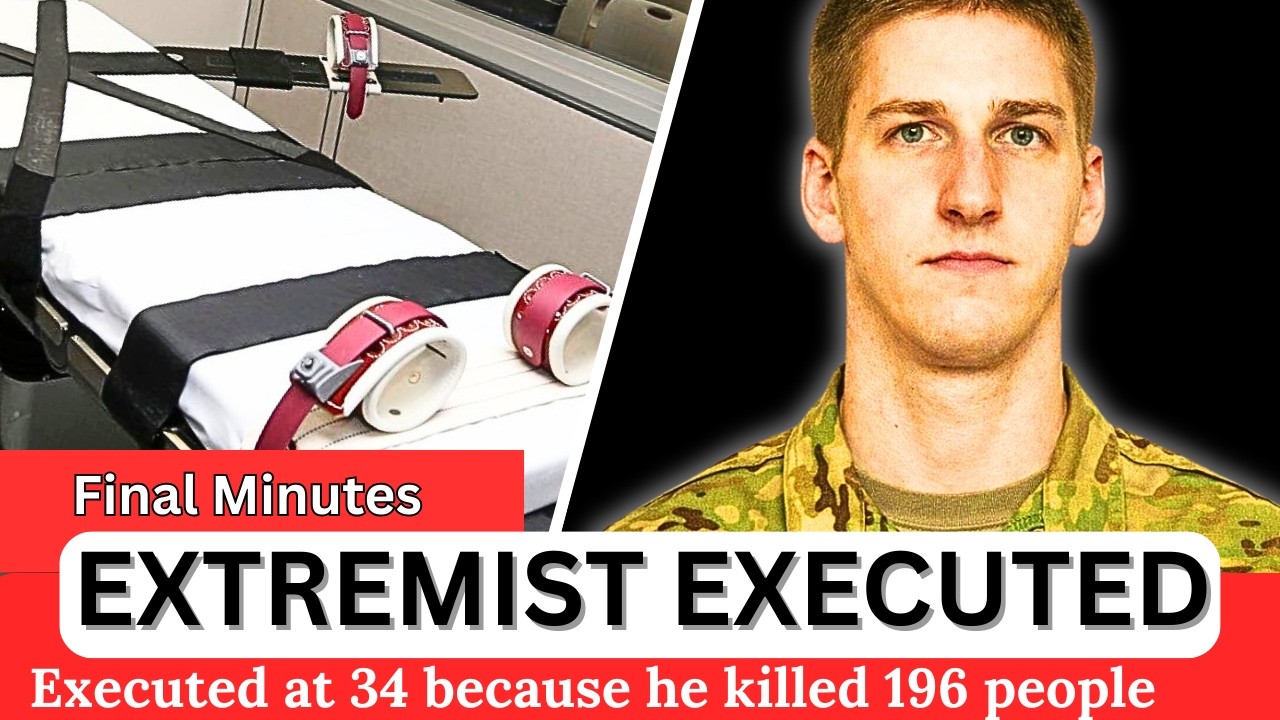
Timothy McVeigh, the man behind the deadliest act of domestic terrorism in U.S. history, was executed on June 11, 2001, at the Federal Correctional Complex in Terre Haute, Indiana. His lethal injection came after six years on death row, marking a grim conclusion to a case that shocked the nation.
 On April 19, 1995, McVeigh detonated a truck bomb outside the Alfred P. Murrah Federal Building in Oklahoma City, killing 168 people, including 19 children. The attack, fueled by his radical anti-government beliefs, left 684 others injured and traumatized a nation. McVeigh’s actions would forever redefine domestic terrorism.
In his final hours, McVeigh chose a simple last meal: two pints of mint chocolate chip ice cream. He spent his last night restless, reflecting on the horrific legacy he left behind. Despite the chaos he caused, he expressed no remorse, viewing himself as a soldier for a cause he believed in.
As dawn broke on execution day, McVeigh was escorted to the chamber, his eyes wide open, unblinking. Witnesses included victims’ families and media members, all prepared to witness the end of a man who claimed to be a patriot. He had submitted a final written statement, the poem “Invictus,” reflecting his unwavering defiance.
At 8:08 a.m. Eastern time, the execution began. The drugs flowed through his veins, rendering him unconscious and stopping his heart. He died without a word, his eyes fixed on the camera, a haunting image of a man who never acknowledged the pain he inflicted.
In Oklahoma City, survivors and victims’ families gathered to watch the execution via closed-circuit broadcast. Reactions ranged from relief to sorrow, a somber acknowledgment of the tragedy that had unfolded years prior. McVeigh’s death was a moment of reckoning, yet it could not erase the scars left on the community.
President George W. Bush later stated that McVeigh’s execution provided a sense of closure for those affected by the bombing. McVeigh, stripped of his military honors, would not be remembered as a soldier but as a terrorist whose actions led to profound loss and grief.
Timothy McVeigh’s story is a chilling reminder of the depths of human ideology gone awry. As the first federal execution in 38 years, his death reopened discussions on capital punishment and domestic terrorism. The Oklahoma City bombing remains a dark chapter in American history, a stark warning of the consequences of hatred.