I never thought I’d be the parent lying awake at night, staring at the ceiling, wondering where it all went wrong. I raised my child with love, gave my time, my energy, often my last dollar. But now the calls are rare, and when they come, they’re cold, critical, or worse. It feels like they’re not my child anymore.
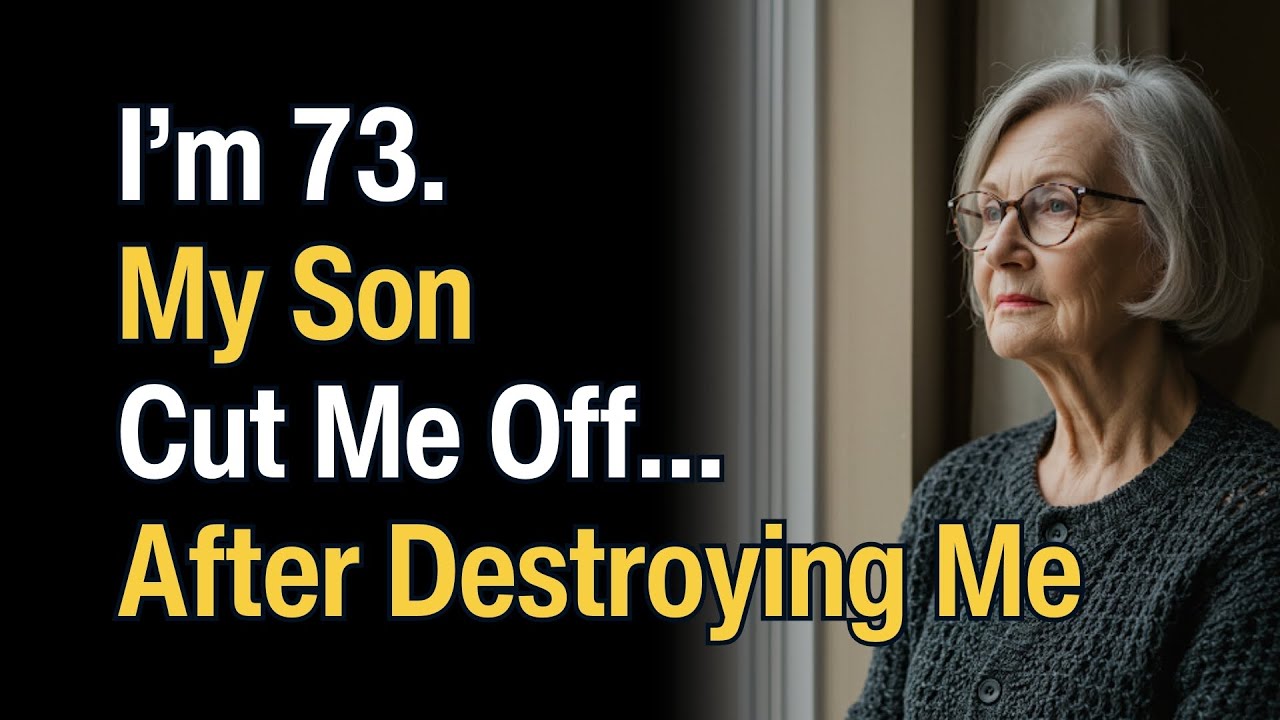
The distance between us has grown so wide, and it feels so personal, like they’re punishing me for something I can’t even name. If this sounds familiar, you’re not alone. Many parents in their 60s and beyond are quietly carrying the same burden. The heartbreaking silence, the cutting remarks, the moments when your own child, the one you rocked to sleep and taught how to tie their shoes, treats you like the villain in their story.
Today, I want to talk about something many people are too afraid to name: when your adult child shows deeply self-centered and manipulative behavior, and what they do right before they cut you off. This isn’t a topic for the faint of heart, but it’s an important one. Because once you begin to understand the pattern, once you put the pieces together, something powerful starts to happen. You begin to heal, and you realize their behavior wasn’t about your failure as a parent.
It was about their need to control, to blame, and to win. Let’s talk about what happens in that final stretch before an adult child like this walks away. There’s something they often do, and it feels like a punch to the gut. It’s cruel, deliberate, and deeply confusing.
They tear you down emotionally before they leave. But why? Why not just walk away? Because for a child who operates this way, it’s not enough to simply create distance.
They need you to feel broken, defeated, questioning your own worth. That way, when they leave, they can walk away as the victim, and you’re left in pieces, unable to move forward, still hoping they’ll come back and somehow make things right. This can be a hard pill to swallow, especially when we’re talking about our own children. It feels unnatural, even impossible, to imagine your son or daughter wanting to see you suffer.
But for children who rely on manipulation and emotional control, that suffering becomes part of the process. Because if you’re in pain, if you’re off balance, they still hold power over you, even when they’re no longer present. Think about that for a moment. They don’t just want space.
They want to control the story of why they left. And to do that, they rewrite history. They highlight your mistakes. They amplify your flaws.
They twist the truth just enough to make themselves look like the wounded party. And the way they do this is often deeply personal. You may start hearing things like, “You never supported me,” or “You were always selfish,” or even “You made my childhood miserable. ” These aren’t just throwaway lines.
They’re darts designed to wound. And they come out just before the exit, when you’re most confused, most vulnerable, and least prepared to fight back. Some parents describe this phase as a kind of psychological ambush. It comes after years, sometimes decades, of trying to keep the peace, of tiptoeing around moods, of giving, forgiving, and hoping that maybe, just maybe, love would be enough.
And when it happens, it feels like betrayal, like being kicked while you’re down. But here’s the truth I want you to hear today. Their behavior is not a reflection of your worth. It’s a reflection of their fear.
Beneath all that arrogance and constant blame, children who behave this way are often deeply insecure. They live with a quiet but persistent fear of inadequacy, a knowing sense that they’re never quite good enough. But instead of facing that pain within themselves, they push it outward. They create a villain to carry what they cannot bear.
And sadly, that villain is often you. It’s easier for them to say, “My mom was toxic,” than to admit they’re struggling with their own failures. It’s easier to ghost their dad than to say, “I’m scared I’m not doing life right. ” And so they build walls.
They assign blame. And they leave, not with honesty or grace, but with one final emotional blow. They might dig up private things you once shared. They might use your moments of vulnerability against you.
They’ll remind you of times you lost your temper, times you made mistakes, as if those isolated moments erase a lifetime of care. Why? Because it gives them permission to cut ties without guilt. In their mind, they’re not abandoning you.
They’re escaping you. And that twist, where they paint you as the threat, is what allows them to sleep at night while leaving you in pieces. I know this may be painful to hear, but understanding their tactics is the first step in reclaiming your peace. Because when you realize that these attacks are strategic, not spontaneous, you begin to see through the smoke.
You stop internalizing the blame. You stop apologizing for things you didn’t do. And you start to build something stronger: emotional clarity. That clarity starts with one simple truth.
People who want healthy relationships don’t destroy others on their way out. They communicate. They take responsibility. They try to leave doors open with love, not slam them shut with shame.
So if your child is attacking you, rewriting the past, or ghosting you after a storm of insults, it’s not because you failed them. It’s because they cannot handle their own pain. And rather than look in the mirror, they aim the mirror at you. That doesn’t mean you were perfect.
No parent is. But being imperfect isn’t a crime. It isn’t a reason to be erased or attacked. It’s simply part of being human.
And now, as you sit here and reflect, maybe with a cup of tea or a gentle breeze coming through the window, I want to ask you something. What if their behavior has more to do with their inability to love themselves than with anything you did or didn’t do? What if their departure isn’t the end of your worth, but the beginning of your freedom? There’s a different kind of strength that grows in us after 60.
It’s the strength of wisdom, of seeing patterns that used to confuse us and finally understanding them. It’s the strength of knowing that we can still live fully, laugh deeply, and heal, even if the ones we love most have wounded us. You’ve made it this far. You’ve weathered storms before.
And this storm, it’s one you don’t have to face alone. We’re going to keep walking through this together because you deserve peace, clarity, and the confidence to know you were never the villain. And your story is far from over. Now that you’re beginning to see the emotional trap for what it truly is, let’s look more deeply at why this happens.
Why does an adult child who behaves this way feel the need to tear you down just before they walk away? It’s tempting to think it’s all about anger or resentment or even punishment. But beneath all that noise, there’s something much deeper going on. Fear.
Not fear of you, but fear of themselves. Fear of being seen. Fear of feeling weak, broken, or unworthy. That fear started a long time ago, often in their own childhood.
But instead of facing it, they built walls. And those walls turned into patterns, and those patterns became their way of living. For many children who behave this way, love doesn’t feel safe. It feels like pressure, like expectation.
So when a parent, especially one who truly cares, comes close, the child doesn’t experience warmth. They feel trapped, vulnerable, exposed. And rather than sit with those feelings, they lash out. It becomes their shield.
But make no mistake, this reaction is not a defense against you. It is a defense against their own unresolved emotional wounds. Think back. Maybe your child used to be loving when they were younger.
Maybe there were moments of real closeness, real joy. But somewhere along the way, that started to fade. They got older, and the warmth was replaced by distance, criticism, silence. You may have told yourself, “It’s just a phase,” or “They’re busy with life,” but deep down you knew something had shifted.
What often happens is this. The more secure you are in your love for them, the more threatened they feel. That may sound strange, but here’s why. It’s because deep inside they feel unlovable.
And when someone truly loves them, it clashes with the story they tell themselves. So they push back. They distort reality. They make you the problem because it’s easier than facing the belief that they might be broken.
Now, you might be thinking, “But I was a good parent. I tried my best. ” Yeah, and you probably were. These patterns don’t always grow out of neglect or mistreatment.
Sometimes they develop from a child’s difficulty in understanding and managing their own emotions, combined with outside pressures like school, peers, media, and their own inner struggles. When they don’t have the tools to cope, they learn to blame instead of reflect. They learn to perform instead of connect. And the people closest to them, the ones who can see past the image they present to the world, often become the enemy.
So when your child enters what’s often called the devaluation phase, it’s not random. It’s a pattern. You’ll start to notice the criticisms come more often. The compliments disappear.
Suddenly, everything you say seems wrong. Everything you do gets twisted. They’ll bring up things from years ago, small moments, minor mistakes, and blow them up into full-blown character flaws. They might say things like, “You were never really there for me,” or “I had to raise myself,” even if you remember countless nights of support, sacrifice, and love.
These statements aren’t about accuracy. They’re about control. If they can rewrite the story, they can justify their escape. They can cast themselves as the wounded hero and you as the villain.
And in their mind, that makes leaving easier. But here’s what they often don’t realize. Parents feel deeply. You don’t just let go of a child because they told you to.
Your love doesn’t have an off switch. So when they leave, especially after hurting you first, they may be done, but you’re left in the wreckage, wondering what happened, replaying every memory, asking yourself what you could have done differently. That’s exactly what they want. Because if you’re stuck in that loop, they still hold power.
They make sure you’re looking inward, blaming yourself instead of seeing what’s really happening. And the truth is, many adult children who behave this way don’t leave in order to grow. They leave to avoid responsibility. They don’t want to face their choices.
They don’t want to face the harm they’ve caused. So they run. And where do they run? Often into new relationships, romantic partners, friends, even mentors who haven’t yet seen behind the carefully constructed image.
These people become a new audience, a new source of attention and reassurance. Because for someone driven by insecurity and control, life often revolves around being admired, validated, and dominant. And when the old source, like a parent, begins to see through the performance, they move on. But don’t be fooled.
This pattern doesn’t end with you. It repeats itself again and again. New people, new conflicts, new exits. Because until they’re willing to face themselves honestly, they will always be running from the truth.
Here’s something important I want you to hold on to. Being left behind does not mean you were lacking. Being blamed does not mean you were wrong. Children who operate from deep inner pain often push that pain onto others because it feels unbearable to carry alone.
That doesn’t excuse the behavior, but it helps explain why it cuts so deeply and why it feels so personal. And it’s also why healing has to start with you, not with changing them, not with getting them to understand, but with setting yourself free from the belief that their choices define your worth. You have given so much, your time, your heart, your years. And even now, with the hurt fresh in your chest, you’re still looking for hope.
Still searching for answers. That says something powerful about who you are. There’s a quiet strength in you that even your child couldn’t take away. And that strength is going to carry you forward.
There will be moments when the loneliness sneaks in. When a holiday feels empty, when you hear someone talk about their kids and feel that pang of longing. That’s okay. Those feelings are real, and you have every right to feel them.
But I want you to also start feeling something else. Relief. Not relief that your child is gone, but relief that you are finally starting to see the pattern. That you are beginning to separate your identity from their behavior.
That you are learning to breathe again without waiting for their approval. It’s not easy, but it is possible. You might have heard the saying, “When someone shows you who they are, believe them. ” It’s time to believe what you’ve seen.
Not just the words, not just the excuses, but the pattern. The way they build you up just to tear you down. The way they exit with drama and blame. The way they leave behind confusion like a storm that’s passed but left everything overturned.
You can learn to steady your life again. You can rebuild peace inside your home even if the phone never rings again. And if someday your child does return, wanting something, needing something, you’ll be ready, not with open wounds, but with open eyes. You’ll see the game for what it is.
And you’ll know that your healing is no longer theirs to undo. Because when you understand the final trick, you stop playing the game. You know, one of the most painful parts of this whole experience isn’t just the leaving. It’s what they leave behind: the empty space, the questions, the doubt.
As parents, especially those of us in our later years, we carry the weight of years of memories, first birthdays, school plays, tearful talks in the kitchen, and now silence, maybe even hatred. And you might still wonder, “Did I do something to deserve this? ” But here’s the truth, and I hope you’ll let it sink in deeply. Their departure was never truly about you.
It was about their inability to live in a relationship where honesty, accountability, and equality were required. You became a mirror, and that mirror reflected things they didn’t want to see. So they shattered it. Let’s talk about what happens after they leave.
You might think the storm has passed, but for many adult children who behave this way, the separation is not the end of the story. It is simply another chapter in the same repeating pattern. Some of them return. Others resurface only when they want something.
It might be money, help, reassurance, or simply a place to unload their pain once again. And when they do, it can reopen wounds you were just beginning to heal. You might get a sudden text after years, or a guilt-laced phone call, or worse, a message passed through someone else in the family. They’re struggling.
They miss you. Or they’re willing to talk, but only if you apologize. And just like that, your heart stirs. You think, “Maybe this is the turning point.
Maybe they’ve changed. Maybe we can finally talk, heal, move forward. ” But often what’s really happening is something more familiar than new. The cycle is starting again.
Remember how it goes. Idealize, devalue, discard, repeat. This is how many of these harmful relationship patterns unfold. They lift you up when they need you.
Suddenly, you’re the good parent again, the one they say they appreciate. Then, once they feel steady and reassured, the tone begins to change. Small criticisms appear. Faults are pointed out.
Nothing feels quite right anymore. You find yourself walking on eggshells again. Then comes the distance, the coldness, the silence. And before you’ve fully caught your breath, they’re gone again.
Every time you get pulled back in without boundaries, the recovery gets harder. Your hope gets cracked, your spirit a little more worn. That’s why awareness is your first and greatest act of freedom. You see, understanding the cycle doesn’t just explain what happened.
It gives you the power to step out of it. You can start to draw lines, not from anger but from wisdom. You can say, “I love my child, but I will not be manipulated. ” You can say, “I’m open to connection, but not if it costs me my peace.
” You can stop chasing closure from someone who may never offer it. Because here’s something important. Closure doesn’t come from their apology. It comes from your clarity.
And clarity tells you that unconditional love does not mean unconditional abuse. You can be a loving parent without accepting cruelty. You can be compassionate without being a doormat. You can hold space in your heart without leaving the door wide open for hurt.
Some people might not understand this. They’ll say, “But they’re your child. Blood is blood. ” And yes, blood may bind us, but it doesn’t excuse bad behavior.
Respect is earned, not assumed. And love, true love, doesn’t demand you shrink to keep the peace. You’ve spent a lifetime giving. You’ve raised families, held jobs, helped neighbors, built communities.
You’ve endured grief, change, and uncertainty. You’ve grown in ways your child may never see. And that’s okay, because the life you’ve built, the strength you carry, it’s yours. It’s not dependent on their approval.
It never was. Now, maybe you’re still holding on to hope. That’s natural. We don’t stop loving just because we’re hurt.
But I want to gently ask, what kind of hope are you holding? Is it hope that they’ll become someone they’re not ready to be? Or is it hope that you’ll be okay no matter what happens? One kind of hope keeps you trapped.
The other sets you free. This is where healing begins. Not when your child comes back and makes things right, but when you stop waiting for them to do so. When you choose to live well, not because they returned, but because you remembered who you are.
There’s a freedom that comes when you stop begging for answers. When you stop trying to rewrite their story and start reclaiming your own. Maybe your story is quieter now. Maybe the holidays are smaller.
Maybe the phone doesn’t ring like it used to. But peace, real peace, that can still be yours. You can fill your life with people who respect you, friends who check in, grandchildren who make you laugh, books that feed your mind, walks that nourish your soul. The beauty of this stage in life is that you get to choose how you live it.
No one gets to define your worth, not even your child. And if they do come back one day, maybe with different words, maybe with the same old script, you’ll know what to look for. You’ll know that love without respect is not love. You’ll listen with both ears and both eyes.
And you’ll make your decisions from a place of strength, not guilt. Because you’ve done the hardest part already. You’ve loved. You’ve tried.
And now you’re choosing to love yourself enough to let go of what keeps you stuck. Let this be your reminder. You matter. Your voice matters.
Your peace matters. You are not invisible, not unlovable, not replaceable. You are a parent who gave your best. And your best was good enough.
So take a deep breath. Let the guilt melt off your shoulders. Let the blame go back where it came from. And look ahead, not behind.
You still have beautiful years ahead of you, years filled with meaning, with joy, with dignity. And you get to live those years free from the weight of a child who couldn’t see your worth. Their blindness doesn’t change your brilliance. Here’s to reclaiming your peace.
Here’s to standing tall in your truth. Here’s to living your best life at any age and never letting anyone, not even your own child, make you feel small again. So, here we are. If you’ve made it to this point, I want to say something from the bottom of my heart.
Thank you. Thank you for being here, for choosing to listen, for opening yourself up to a conversation that’s anything but easy. These aren’t just words on a screen or a voice in a video. These are pieces of real life, your life, your story.
And your courage to face it with clarity and strength is something to be proud of. There’s something incredibly powerful about naming what’s been hurting you, especially when it comes from someone you love. And when that someone is your own child, the pain cuts deeper than almost anything else. But the moment you stop pretending it’s not happening, the moment you stop minimizing your hurt and start acknowledging the pattern, that’s the moment you begin to reclaim your peace.
Maybe today you feel raw. Maybe your heart is heavy. That’s okay. Healing isn’t about pretending to be okay.
It’s about giving yourself space to feel, to cry, to breathe, and to know that your value was never measured by your child’s ability to love you well. There’s a lie that says you have to earn love. That if you just do enough, give enough, fix enough, eventually they’ll come around. But here’s the truth.
Healthy love doesn’t require you to shrink. It doesn’t demand silence. It doesn’t punish you for aging, for setting boundaries, or for saying, “I deserve respect. ” You deserve love that’s safe.
Love that honors you. Love that doesn’t leave you walking on eggshells. And if that love doesn’t come from your child right now, it can still come from others, friends, community, even from within yourself. And yes, that’s possible.
You might have spent decades pouring into everyone else, but now, in this chapter of life, it’s time to pour back into yourself. It’s time to tend to the garden of your own well-being. That means surrounding yourself with people who lift you up, choosing peace over performance, letting go of guilt that was never yours to carry. It also means having hard conversations, sometimes with yourself, asking, “What am I still hoping for?
” and “What do I need to let go of? ” It may mean grieving not just the loss of the relationship, but the idea of what you thought it would be. That grief is real and valid. But it can walk beside hope, not for them to change, but for you to grow.
Because healing doesn’t mean you stop missing them. It means you stop losing yourself every time they leave. And you’re not doing this alone. Here on this channel, we are building a space where you are seen, heard, and valued.
Where the voices of older adults aren’t pushed aside, but honored. Where your stories matter, your healing matters, and where you’re allowed to speak the truth, even when it hurts. If you found this video helpful, I’d love for you to leave a comment below. You don’t need to tell your whole story unless you want to.
Just a simple note like, “I needed this today,” or “I understand this all too well,” can remind someone else that they’re not alone either. This space is yours, and the community here is strong and supportive. And if you want to keep walking this healing journey together, I invite you to subscribe to the channel, Strong Elderly Life. We’re here every week with videos that speak to the real challenges and real victories of life after 60.
Not sugarcoated, not patronizing, just honest, helpful, heartfelt conversations for people who’ve lived, who’ve endured, and who still want to live fully. You can also share this video with someone who might need it. A friend, a sibling, a fellow parent who’s quietly carrying the same heartbreak. Sometimes just hearing “me too” is enough to make the world feel a little lighter.
Before we go, I want to leave you with one final thought. There’s a version of your life waiting on the other side of this pain. A version where you wake up and feel calm instead of confused. Where your days are filled with peace, not anxiety.
Where you no longer beg to be loved the right way, but instead offer that love to yourself. That life is possible. And it begins with one choice: to stop chasing someone else’s healing and to start claiming your own. You are not broken.
You are not forgotten. You are not alone. Here’s to strength that doesn’t shout but endures. To love that starts from within.
And to living your best life at any age, in any season. Take care of yourself. You’ve earned it.
And you are so very worth it.