I sat in my living room, phone in hand, rehearsing a simple question for my daughter. I needed a ride to the doctor, nothing more. But I couldn’t press call. My stomach tightened, and that familiar voice whispered, “Don’t bother her.
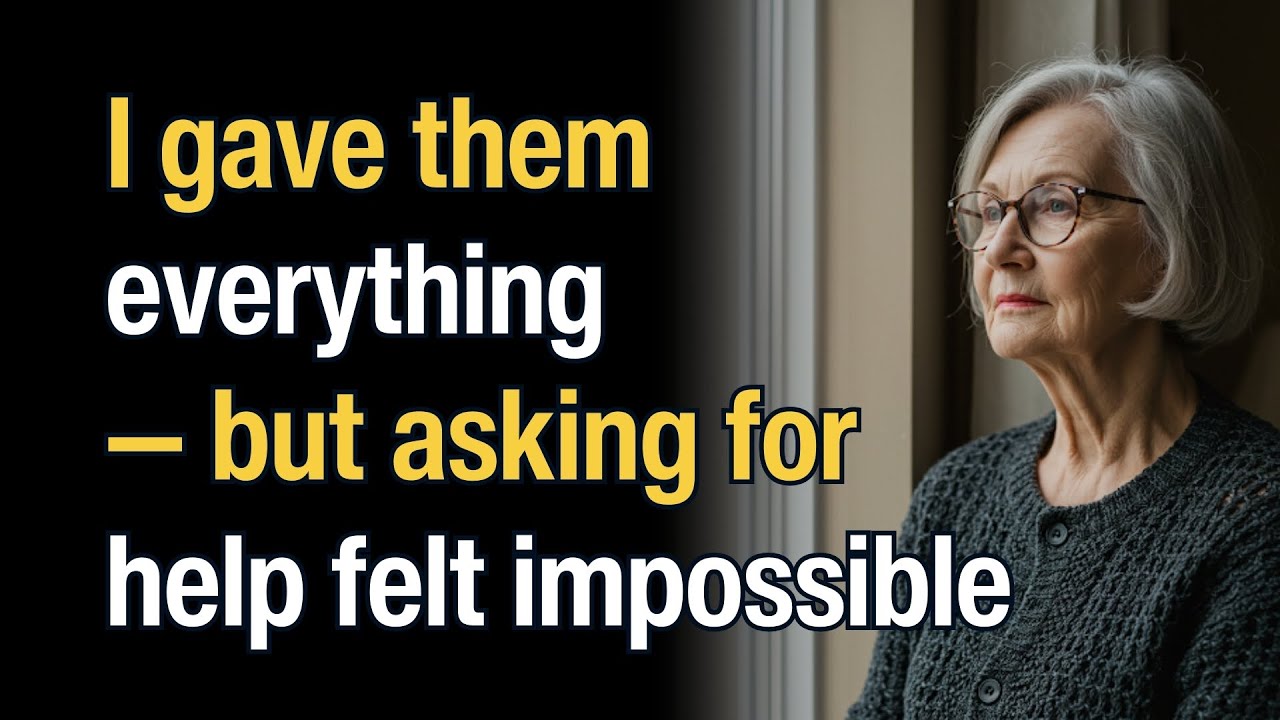
She’ll just get irritated. ” So I put the phone down and went alone. It wasn’t always like this. I used to be the one everyone leaned on.
I raised my children, put their needs first, and told myself that’s what love meant. But somewhere along the way, I forgot that I had needs too. And when I finally tried to ask for help, I learned it came with a price. My daughter, Sarah, has always been the center of her own world.
She’s successful, busy, and proud. But when I need something, even something small, she sighs. She rolls her eyes. She makes me feel like a burden.
Once, I asked her to help me move a heavy box. She said, “Mom, I have my own life. Can’t you handle it? ” I felt my face burn with shame.
I apologized and said I’d manage. That shame didn’t come from nowhere. I grew up in a home where needing anything was weakness. My parents were tough, and I learned to be tough too.
I learned to push through, to take care of everyone else, and to never ask for anything in return. So when Sarah treats me like I’m inconvenient, it triggers something old in me. It tells me I’m wrong for needing help. But I’m starting to see things differently now.
A therapist once told me about “emotional location”—the role you play in your family’s invisible system. In my family, I’m the giver. I’m the one who supports, who never complains, who exists to make others feel good. And that role doesn’t change just because my children grew up.
Sarah still expects me to be that person. She gets angry when I step out of line. One day, I decided to try. I called her and asked if she could come over for dinner, just to talk.
She said she was too busy. “You’re always asking for things, Mom,” she said. “Can’t you just be happy with what you have? ” I hung up and cried.
I felt like I was invisible, like my feelings didn’t matter. But then I realized something. Her reaction wasn’t about me. It was about her.
She’s emotionally immature, and she can’t handle anyone else’s needs. That’s not my fault. And I don’t have to keep shrinking myself to make her comfortable. I started small.
I told a friend, “I’ve been putting myself last, and I want to stop. ” She hugged me and said, “It’s about time. ” I began to practice asking for help, even if my voice shook. I asked my neighbor to help me carry groceries.
I asked my sister to come over for coffee. Each time, I felt that wave of shame, but I pushed through it. I told myself, “This is not mine. This is not my shame.
”
It’s not easy. Sarah still makes me feel guilty. She says I’m being dramatic, that I’m selfish. But I’m learning to let go of that.
I’m learning that I don’t owe her my emotional safety if she won’t offer me the same. I’m learning that love shouldn’t cost me my peace. I still love my daughter. I always will.
But I’m done walking on eggshells. I’m done pretending I don’t need anything. I’m done being invisible. I’m a person, with needs and feelings and limits.
And I deserve to be cared for, just like I’ve cared for everyone else my whole life. It’s never too late to come home to yourself. It’s never too late to unlearn the lies.
And it’s never too late to choose peace over performance.