You have a sore hip that has been aching for weeks, and you finally worked up the courage to mention it to your daughter. You said you were tired, that the new medication leaves you drained, that you just wanted to be honest about how you feel. You were not complaining, not asking for anything. You just wanted someone to look at you and say, I hear you.
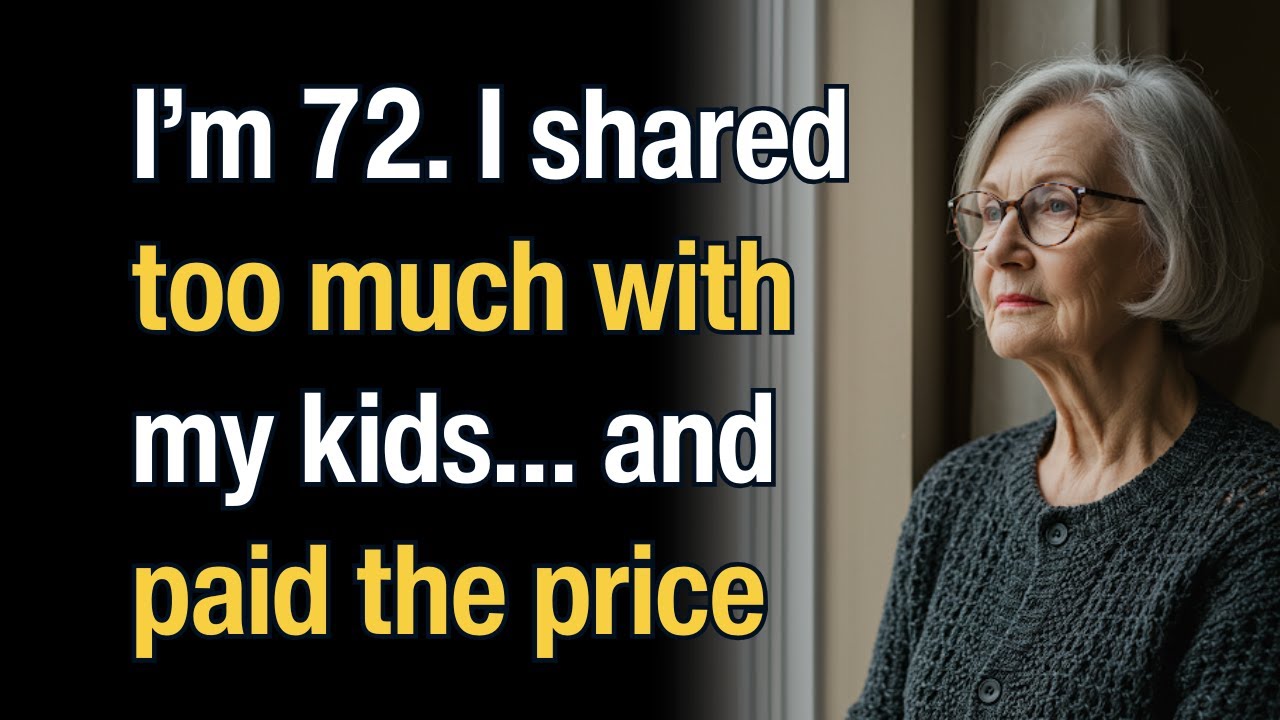
Instead, her phone buzzed. She glanced at it, murmured something about a work email, and changed the subject. The moment passed. Maybe you tried again with someone else, and the same thing happened.
That heavy silence settled between you, the kind that says, I don’t know what to do with this. That silence can be a lonely place to stand. But this is the truth you need to hear: your body is not a topic that requires justification. You do not owe anyone an explanation for how much you hurt, how often you visit the doctor, or how many pills you take just to get through a single day.
The fact that you are still here, still standing, still showing up, is enough. Often we explain our pain not because we want attention, but because we want connection. We want someone to say, I see you, I am with you. But sometimes what we get is dismissal, and that stings even more than the pain itself.
So hear this now: you can stop explaining. Not because your pain is not real, but because your dignity is real. You can carry your truth quietly, not for validation, but for self-respect. There is a powerful kind of silence that protects rather than suppresses.
It says, I know what I am going through, and that is enough. When you stop chasing empathy from people who cannot give it, you can finally start offering that empathy to yourself. That is where peace begins. Then comes the other question, the one people ask with a tilted head and a tone that suggests something tragic: So, are you seeing anyone these days?
Maybe you smiled and said no, and watched their face fill with pity. Maybe you wanted to explain that after years of caregiving, of raising children, of putting everyone else first, you finally chose yourself. But you hesitated, because society still whispers that being alone means being lonely, that companionship is the only proof of worth. Let me challenge that.
Being alone is not a failure. It is not a disease or a flaw, and it is certainly not something to apologize for. Sometimes solitude is the most powerful choice you can make. It is the quiet comfort of your own space.
It is drinking tea without interruption. It is sleeping through the night without worry. It is thinking your own thoughts on your own time. You do not owe anyone an explanation for that.
If your heart is calm, let that be your answer. Think of the hermit in spiritual traditions. She is not hiding. She is not broken.
She carved her own cave and found peace in the quiet. That is not defeat. That is clarity. You are not a missing half waiting to be completed.
You are already whole. And if people cannot understand that, their discomfort says more about them than your choices ever could. As we age, we gain the right to choose not just how we live, but what we share and who we share it with. That is a privilege, and it is worth protecting.
You have earned this season of life. You have earned your boundaries. You have earned the right to speak less and live more. Now let us talk about another truth that quietly wears you down: the need to explain how deeply you have been disappointed.
You know the story. The betrayals. The broken promises. The people who said they would be there and were not.
The ones you sacrificed for who never once turned around to say thank you. It is tempting to tell that story again and again, hoping this time someone will finally say, That was not fair. You deserved better. But here is the thing: not everyone is capable of holding that kind of truth.
When you hand your deepest wounds to someone who cannot or will not receive them, it is like opening a cut in the middle of a dust storm. Instead of healing, it gets infected. So you do not have to tell that story. You do not have to relive it just to prove it happened.
The people who were not there for you when you needed them are not going to show up now to suddenly make it right. Your healing does not depend on their apology. Instead of explaining the wound, tend to it privately, the way a gardener tends to soil that has been trampled. Clear the rocks.
Breathe new life into it. Write a letter to the person who hurt you, a letter you will never send. Say everything you wish you could say. Then let it go.
Keep it, burn it, cry over it. But do not explain it to people who will not understand. Because you do not need to be understood to be whole. You just need to be honest with yourself.
There is dignity in that. There is strength in that. And from there, everything begins to change. Here is where things can get tricky.
Just when you begin to feel peace in your new choices, another quiet habit sneaks in through the back door. You start apologizing for the way you live. Sorry, I cannot. Sorry, I am just not up for that.
Sorry for saying no. Sound familiar? You have been trained for decades to be available, agreeable, helpful. To put yourself last.
And now, when you finally stop saying yes out of guilt and start saying no out of self-respect, it feels unfamiliar. Even scary. But here is the truth that might set you free: you do not need to apologize for living the way you choose. You have lived long enough to know what drains you, what lifts you, what matters, and what does not.
There is nothing wrong with choosing quiet instead of chaos. There is nothing wrong with deciding not to attend every event, not to entertain every guest, not to solve every family problem. That is not selfish. That is wise.
The people who love you will adjust. The ones who do not were never really listening to begin with. The guilt you feel, it is not yours. It was given to you wrapped in duty and tied with expectations.
But you do not have to carry it anymore. You have already given enough. You have already proven enough. The next time you catch yourself about to say, I am sorry for doing what is right for you, pause.
Say something stronger instead. Say, Thanks for understanding. I will not be able to make it. I have made other plans for myself.
No guilt. No apology. Just boundaries. Speaking of boundaries, there is something even deeper to understand: you do not have to justify the lines you draw.
Think of your life as a house. A home you built with your hands, your time, your sacrifice. Every room holds memories. Every wall has meaning.
Now imagine that house with no doors. Anyone can walk in. Anyone can stay as long as they like, take what they want, and leave their mess behind. No one knocks.
No one asks. That is what life feels like when you have never been taught to set boundaries. Exhausting. Disorienting.
Overwhelming. But now you are starting to close the door, kindly, clearly, calmly. You are putting up signs that say, Please knock. No entry without invitation.
Respect this space. And some people will not like it. Not because your boundaries are wrong, but because they benefited from your lack of them. They will say, You have changed.
You are not as generous as you used to be. They will wrap guilt inside of love, call their expectations needs and their convenience family. But you do not have to explain. You have spent years, maybe decades, saying yes to everything and everyone, missing sleep, skipping meals, putting your needs second, third, last.
And for what? So that people could be comfortable while you quietly faded in the background. Not anymore. Your body needs rest.
Your mind needs space. Your spirit needs time to recover from a lifetime of being stretched thin. So when you say no, say it without a paragraph of explanation. Say it without guilt, without permission.
You are not required to set yourself on fire to keep others warm. If someone truly loves you, they will understand that. Maybe not right away, but eventually. And if they do not, that is their journey, not yours.
There is one shadow that lingers in the back of many minds, even after the lines are drawn and the apologies have stopped. It is the fear of growing old. It is a quiet fear. Not something we shout from rooftops, but it is there in the way we talk to ourselves in the mirror, in the way we hesitate to try something new, in the way we downplay our dreams with phrases like, It is too late for me now.
Listen carefully. It is not too late. Not to feel. Not to grow.
Not to change. Not to live. Aging is not a decline. It is a return.
A returning to yourself after years of being scattered into jobs, relationships, children, roles. Now you are here with more clarity, more wisdom, more choice than ever before. Yes, the body changes. The face changes.
But that does not mean you fade. You are not a candle burning out. You are the flame that remains. So do not confess your fear of growing old to people who will not know what to do with it.
They will respond with pity, or worse, with silence. And that only makes the fear grow. Instead, face that fear like an old friend. Sit with it.
Ask it where it came from, what it wants. Then thank it for trying to protect you, and let it go. Because the truth is, fear does not age you. Hiding from life does.
And you were not born to shrink. You were born to rise, even now, especially now. Wear what makes you feel alive. Say what has been sitting in your chest for years.
Take the class. Book the trip. Speak your mind. Protect your peace.
You have nothing to prove, no one to impress. You do not need to make yourself smaller so others feel bigger. Your age is not a limit. It is a badge of honor.
As you learn to say no without flinching, something inside you begins to realign. But here is what might surprise you: that silence, that space you fought so hard to reclaim, does not always feel peaceful at first. Sometimes it feels lonely. Sometimes it feels like loss.
When you start living life on your own terms, some people will drift away. Others will say you have changed, that you are not as fun, not as available, not who you used to be. But the truth is, they are just not used to your freedom. And that is okay.
You were not meant to carry everyone’s comfort. You were not built to bend in every direction. You were not born to be a servant to expectations. So do not be afraid of the silence that follows your boundaries.
That is not emptiness. That is clarity. And in that clarity, something else becomes clear, something that hurts in its own quiet way. You start to notice that the things you have accomplished, the sacrifices you have made, the work you have put in, often go unseen.
Maybe you have tried to explain it. Maybe you sat with someone and said, I used to do all of this. I gave up so much for you. You do not know how hard it was for me back then.
And still, their eyes glazed over. Their attention drifted. It is not fair. But here is another truth to keep close to your heart: you do not need to talk about your accomplishments unless someone asks.
That might sound harsh, but it is actually one of the most liberating things you will ever realize. Because if you need to convince someone of your worth, you have already handed them a kind of power they did not earn. Your accomplishments, the kids you raised, the jobs you worked, the times you kept going when others would have quit, those things are not up for negotiation. They are roots.
And roots do not need to be displayed. They are what hold you up when everything else falls away. There is a quiet confidence that comes from knowing who you are, what you have done, and what it cost you, without needing the world to clap for it. So instead of retelling your story to ears that will not hear it, try something different.
Celebrate your wins in solitude. Light a candle for the you that made it through. Write down something you are proud of and put it somewhere you will see it. Not for approval.
Just for remembrance. You have lived a life worth honoring. But not everyone deserves access to that story. Protect it.
Hold it close. Let it feed you from the inside out. Because the most powerful kind of respect is the kind you do not have to ask for. It radiates in your posture, your peace, your presence.
People sense it. They already know. There is one final truth, and it may be the hardest of all to live by. Not because it is complex, but because it is so quiet, so simple, that we almost always overlook it.
You do not need to explain why you now choose peace. You do not have to soften it. You do not have to justify it. You do not have to say, I am not avoiding anyone, I just need rest.
Or, It is not that I do not care, I just need space. You do not need disclaimers. You do not need excuses. You need peace.
And that is reason enough. I know peace feels unfamiliar, especially when you have spent decades serving, fixing, giving, pleasing. Peace almost feels wrong, like you have forgotten something, like you are being selfish. That is not selfishness.
That is recovery. You are recovering from a lifetime of overextending. The culture you grew up in, especially as a woman, likely told you that being a good person meant being endlessly available. That rest was laziness.
That quiet was suspicious. That boundaries were rude. But you have reached a point in life where those old rules no longer apply. And the truth is, they never really served you to begin with.
So when you choose to step away, do it quietly. When you choose not to respond right away, do it calmly. When you choose peace over performance, do it without shame. You do not have to broadcast your transformation.
You just have to live it. Let people think what they want. Let them assume. Let them talk.
Because your life no longer belongs to everyone’s opinions. It belongs to you. And if someone does not understand your calm, that is okay. Not everything has to be understood to be honored.
After everything you have lived through, the heartbreak, the exhaustion, the sacrifice, you deserve a chapter that feels like you. One that is not crowded by guilt. One that is not written by obligation. One that starts with a deep breath and ends with a full heart.
So if today you feel the pull to explain yourself, to defend your decisions, to justify your stillness, remember this: you do not need to explain peace. You just need to protect it. Peace is not the absence of noise. It is the presence of self-respect.
And that is not something you wait for. It is something you choose. Choose it now. Choose it boldly.
Choose it without a single extra word. And if someone says you have changed, smile. That is the point.